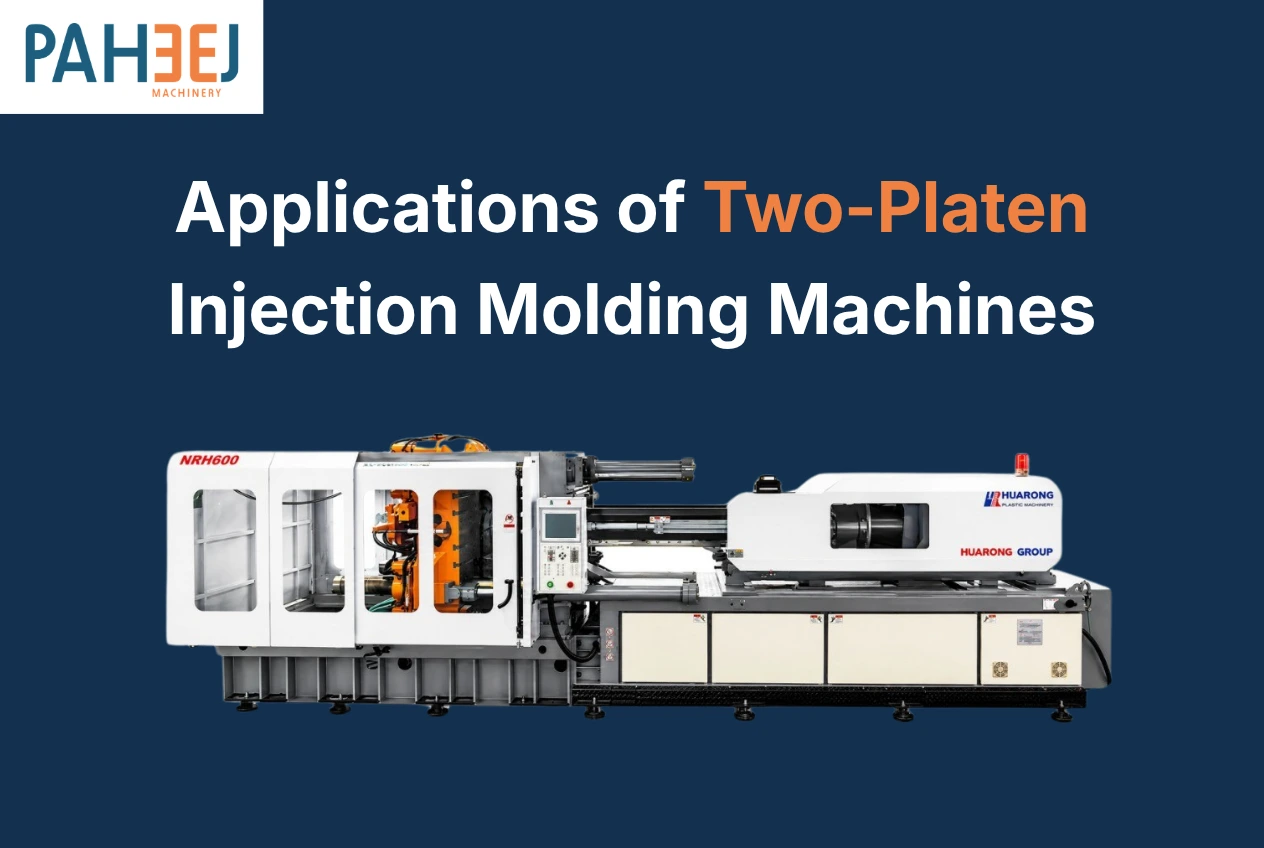
Applications of Two-Platen Injection Molding Machines
Growing demand for larger plastic components across industries continues driving the adoption of specialized molding equipment. As manufacturers increasingly replace metal assemblies with large molded plastic components, demand for high-tonnage molding solutions continues to grow.
Traditional injection molding systems may face limitations when handling large molds and applications that require substantial clamping force, large shot capacities, and stable production conditions. Two-platen injection molding machines are widely used in industries requiring large-part production, high-volume output, and consistent molding performance. Their ability to accommodate large molds while maintaining a compact machine footprint makes them an important solution for modern manufacturing operations.
Why Two-Platen Machines Are Used for Large-Part Manufacturing
Two-platen injection molding machines address specific production challenges associated with manufacturing large plastic components. Their large mold capacity allows manufacturers to produce parts that exceed the practical limits of many conventional molding systems.
High clamping force availability supports stable molding conditions during the injection process, while the compact machine footprint helps manufacturers optimize production floor space. This combination of size capability and operational efficiency makes two-platen machines a preferred choice for large-scale manufacturing applications.
Automotive Industry Applications
Exterior Automotive Components
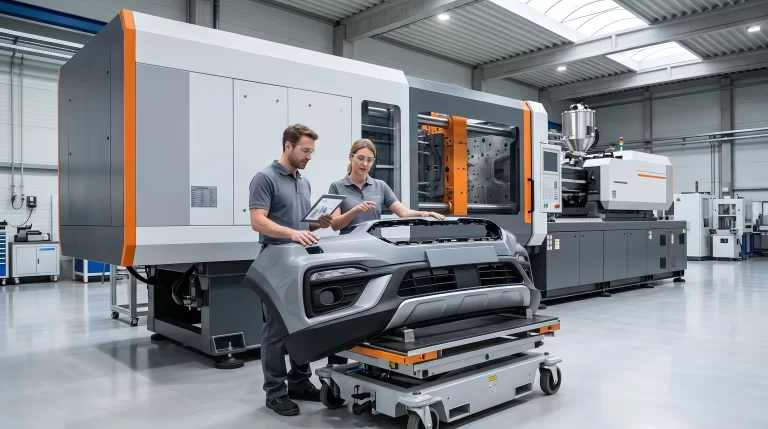
Two-platen injection molding machines are widely used to manufacture large exterior vehicle components such as:
- Front and rear bumpers
- Grilles
- Fender components
- Exterior trim panels
These parts require large molds, high clamping force, and consistent dimensional control. Two-platen systems provide the stable molding conditions needed to maintain quality standards across high-volume automotive production.
Interior Automotive Components
Interior automotive applications include:
- Dashboard structures
- Door panels
- Centre console assemblies
- Interior trim components
These products often feature complex geometries and large dimensions that require precise molding performance and long-term production consistency.
Plastic Pallets and Material Handling Products
Plastic pallet manufacturing represents one of the strongest application sectors for two-platen injection molding machines.
Common products include:
- Plastic pallets
- Storage crates
- Bulk containers
- Industrial bins
- Material handling trays
These products typically have large projected areas and thick wall sections, which require substantial clamping force and stable mold conditions throughout the molding cycle.
One of the benefits of two-platen machines is that their large capacity allows manufacturers to produce single-piece pallets and containers without secondary assembly operations, improving both production efficiency and product durability.
Industrial and Infrastructure Components
Equipment Housings and Utility Components
Many industrial products require large plastic housings and protective structures that can only be produced efficiently using large molds.
Typical applications include:
- Equipment housings
- Utility boxes
- Cable management systems
- Protective machine covers
- Electrical enclosures
These components require consistent dimensions, structural strength, and reliable production performance.
Construction and Infrastructure Products
Construction and infrastructure sectors also utilise two-platen molding technology for products such as:
- Outdoor utility enclosures
- Weather-resistant components
- Large structural plastic parts
- Infrastructure support products
The size and durability requirements of these applications make two-platen machines particularly suitable.
Appliance and Home Equipment Manufacturing
Common Products
Appliance manufacturers use two-platen injection molding machines to produce large plastic components such as:
- Refrigerator liners
- Washing machine tubs
- Pump housings
- Air-conditioner housings
- Water storage system components
These products require large molds and high production volumes while maintaining consistent dimensional accuracy.
Production Requirements
Appliance production demands equipment capable of delivering reliable performance across extended production runs. Two-platen systems support these requirements through stable clamping conditions, large mold compatibility, and efficient manufacturing capability.
Consistent part quality is particularly important in appliance manufacturing, where dimensional accuracy directly affects assembly and product performance.
Packaging and Logistics Applications
Large Containers and Transport Packaging
Packaging manufacturers rely on two-platen injection molding machines to produce:
- Large containers
- Reusable transport packaging
- Industrial totes
- Heavy-duty storage solutions
These products require large molds and efficient production rates to meet growing logistics and distribution demands.
Distribution and Storage Solutions
Distribution and warehousing operations increasingly use molded plastic products for storage and transportation.
Applications include:
- Distribution totes
- Stackable containers
- Warehouse storage systems
- Material transport bins
Two-platen machines support these applications by providing the production capacity needed for large-volume manufacturing.
Emerging Applications for Large Plastic Components
The demand for large molded plastic components continues to expand into new industries.
Emerging applications include:
- EV battery housings
- Charging infrastructure enclosures
- Renewable energy equipment housings
- Industrial automation system components
- Large technical plastic assemblies
Manufacturers are increasingly replacing metal components with engineered plastic alternatives to reduce weight, simplify production, and improve design flexibility.
As these trends continue, two-platen injection molding machines are expected to play an increasingly important role in advanced manufacturing.
Factors That Influence Application Suitability
Several factors determine whether two-platen injection molding machines are the right choice for a particular application.
Important considerations include:
- Part size requirements
- Mold dimensions and weight
- Production volume expectations
- Clamping force requirements
- Material characteristics
- Automation integration needs
- Long-term production scalability
Evaluating these factors helps manufacturers choose the right two-platen injection molding machines that align with their production goals and application requirements.
Wide-Ranging Industrial Applications
Two-platen injection molding machines support a wide range of industries requiring large-volume production of plastic components. Automotive, material handling, industrial equipment, appliance, and packaging sectors all rely on these machines to produce large, high-quality components efficiently.
Their widespread adoption demonstrates the versatility of two-platen technology in addressing modern manufacturing challenges. As industries continue to demand larger plastic components and greater production efficiency, two-platen injection molding machines remain a valuable solution for high-tonnage and large-part manufacturing.
For manufacturers producing large plastic components, selecting the right molding technology plays a critical role in achieving productivity, part quality, and long-term operational efficiency.
Paheej Machinery supports manufacturers with advanced injection molding solutions designed for large-part production, high-tonnage applications, and reliable industrial manufacturing operations.