How Two-Platen Injection Molding Machines Work: Explained
Large-scale injection molding operations require robust equipment capable of handling large molds and generating high clamping forces. Manufacturers producing automotive components, industrial pallets, appliance housings, and large packaging products face specific challenges that standard injection molding machines cannot address efficiently.
Two-platen injection molding machines provide a specialized solution for high-tonnage applications and large mold handling. Their simplified clamping structure and direct hydraulic force generation make them particularly suitable for heavy-duty production environments.
What is a Two-Platen Injection Molding Machine?
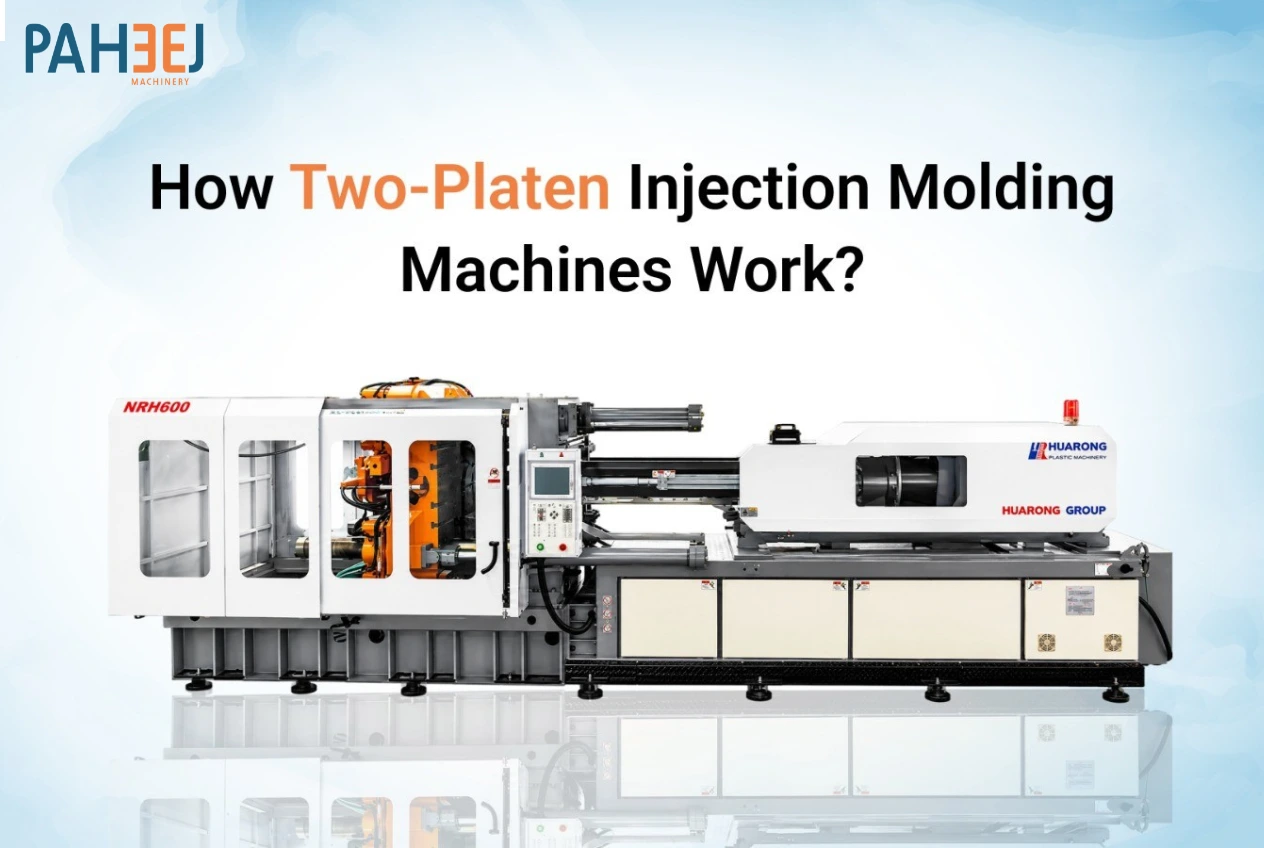
A two-platen injection molding machine features a clamping structure consisting of two main platens, a fixed platen and a moving platen. The fixed platen remains stationary and houses the injection unit, while the moving platen travels along tie bars to open and close the mold.
This configuration uses direct hydraulic pressure to generate clamping force. The moving platen presses the mold halves together, creating the secure closure necessary for plastic injection and part formation.
Why It Is Called “Two-Platen”
The term refers to the machine’s structural design featuring two primary platens rather than the three-platen arrangement found in toggle clamping systems. This simplified structure reduces overall machine length and eliminates complex mechanical linkages.
The two-platen design creates a more compact machine footprint while maintaining the clamping force capabilities needed for large mold applications.
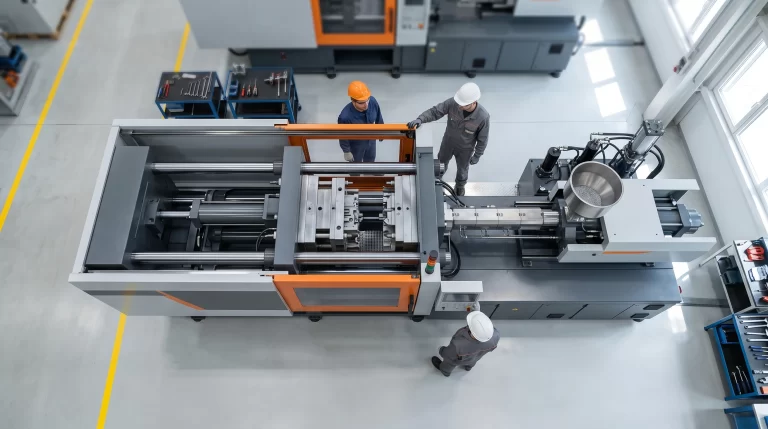
How Two-Platen Injection Molding Machines Work
Mold Clamping Process
The molding cycle begins when hydraulic cylinders generate clamping force that drives the moving platen forward. This movement brings the mold halves together and creates a sealed cavity ready for plastic injection.
Injection and Filling Stage
Once the mold closes completely, the injection unit delivers molten plastic into the mold cavity under controlled pressure and temperature conditions. Stable clamping force helps prevent mold opening and flash formation during filling.
Mold Opening and Part Ejection
After cooling, hydraulic pressure releases and the moving platen retracts along the tie bars, opening the mold. The ejection system then removes the molded component, allowing the next production cycle to begin.
Key Structural Features of Two-Platen Injection Molding Machines
Compact Machine Design
Two-platen injection molding machines occupy less floor space than equivalent toggle systems due to their simplified clamping structure. Eliminating large toggle linkages helps reduce machine length and improve floor space utilization.
Large Mold Capacity
The two-platen configuration accommodates large molds more effectively than traditional systems. Wider platen spacing and larger opening strokes support substantial tooling used for large plastic components.
Hydraulic Clamping System
Direct hydraulic clamping provides precise control over mold closure and pressure distribution. Hydraulic cylinders deliver stable clamping force across the platen surface, supporting consistent molding conditions throughout production.
Tie-Bar and Platen Structure
Robust tie-bar configurations support large mold dimensions while maintaining machine rigidity during high-pressure molding operations. Platen structures distribute clamping force evenly across the mold surface, helping minimize deflection.
Why Manufacturers Use Two-Platen Injection Molding Machines
Large-Part Production Capability
Two-platen machines support the production of large plastic components that require substantial mold dimensions and high clamping force.
Space Efficiency
The compact machine structure allows manufacturers to optimize production floor layouts and improve equipment utilization.
Stable Clamping Performance
Direct hydraulic clamping supports stable molding conditions for large parts and high-tonnage applications.
Better Accessibility
The simplified platen structure improves accessibility during mold changes and production setup activities.
Automation Integration
Open machine architecture allows easier integration with robotic handling systems, automated production cells, and vision-based inspection systems for real-time quality monitoring and enhanced process reliability.
Common Applications of Two-Platen Injection Molding Machines
Two-platen systems are widely used in industries requiring large plastic component production.
- Automotive: bumpers, instrument panels, door panels, interior and exterior components
- Material handling: pallets, crates, bulk containers, storage bins
- Appliances: refrigerator interiors, washing machine components, large housing assemblies
- Industrial products: protective covers, equipment housings, specialized containers
- Packaging: large-format containers, totes, and distribution packaging
Important Considerations When Choosing a Two-Platen Machine
Clamping Force Requirements
Selecting the correct clamping tonnage requires matching machine capacity to mold size and part geometry. Proper clamping force helps prevent flash and maintains molding stability.
Mold Dimensions and Machine Compatibility
Platen size and tie-bar spacing must support the mold dimensions required for production applications. Maximum daylight opening also determines mold compatibility.
Production Volume and Automation Needs
Two-platen machines are commonly used in large-scale manufacturing environments where production volumes justify higher-capacity equipment and automation integration.
Energy Efficiency and Machine Stability
Modern hydraulic systems significantly influence operational efficiency and energy consumption, and many manufacturers are now shifting toward all-electric alternatives for higher precision and lower power usage.
Two-Platen Machines in Modern Manufacturing
The growing demand for larger molded components continues to increase the adoption of two-platen injection molding machines across multiple industries. Manufacturers are increasingly using large plastic parts to reduce assembly complexity and replace traditional materials.
Two-platen machines also integrate effectively with automated production systems, supporting robotic handling, high-volume manufacturing, and stable production processes. Improved hydraulic systems and modern machine controls continue to enhance efficiency and operational reliability.
Conclusion
Two-platen injection molding machines are designed to support large-scale molding operations that require high clamping force, large mold capacity, and stable production performance. Their compact structure, direct hydraulic clamping system, and automation compatibility make them well-suited for modern manufacturing environments across automotive, industrial, appliance, and packaging sectors.
As manufacturers continue to demand larger molded components and higher production efficiency, two-platen injection molding machines remain an important solution for heavy-duty injection molding applications.
Paheej Machinery supports manufacturers with advanced injection molding solutions designed for reliable, efficient, and high-performance production across demanding industrial applications.
Frequently Asked Questions (FAQs)
1. What is a two-platen injection molding machine?
A two-platen injection molding machine uses a fixed platen and a moving platen to clamp molds using direct hydraulic force. This design eliminates complex toggle mechanisms, making the machine more compact, efficient, and suitable for large molds and high-tonnage plastic manufacturing applications.
2. How does a two-platen injection molding machine work?
The machine closes the mold using hydraulic cylinders, injects molten plastic into the mold cavity, allows the part to cool, and then opens the mold for part ejection. Direct hydraulic clamping ensures stable pressure and consistent part quality throughout the molding cycle.
3. What are the benefits of a two-platen injection molding machine?
Key benefits include a smaller machine footprint, larger mold capacity, improved accessibility during mold changes, stable clamping force, and efficient production of large plastic parts such as automotive components, pallets, and appliance housings.
4. Two-platen vs. three-platen injection molding machines: which is better?
Two-platen machines are generally preferred for large molds and high-tonnage applications because they save floor space and provide longer mold opening strokes. Three-platen machines may be better suited for smaller or more conventional molding operations.
5. What industries commonly use two-platen injection molding machines?
Industries such as automotive, packaging, consumer goods, appliances, and industrial manufacturing use two-platen machines to produce large plastic parts that require high clamping force and precise molding performance.