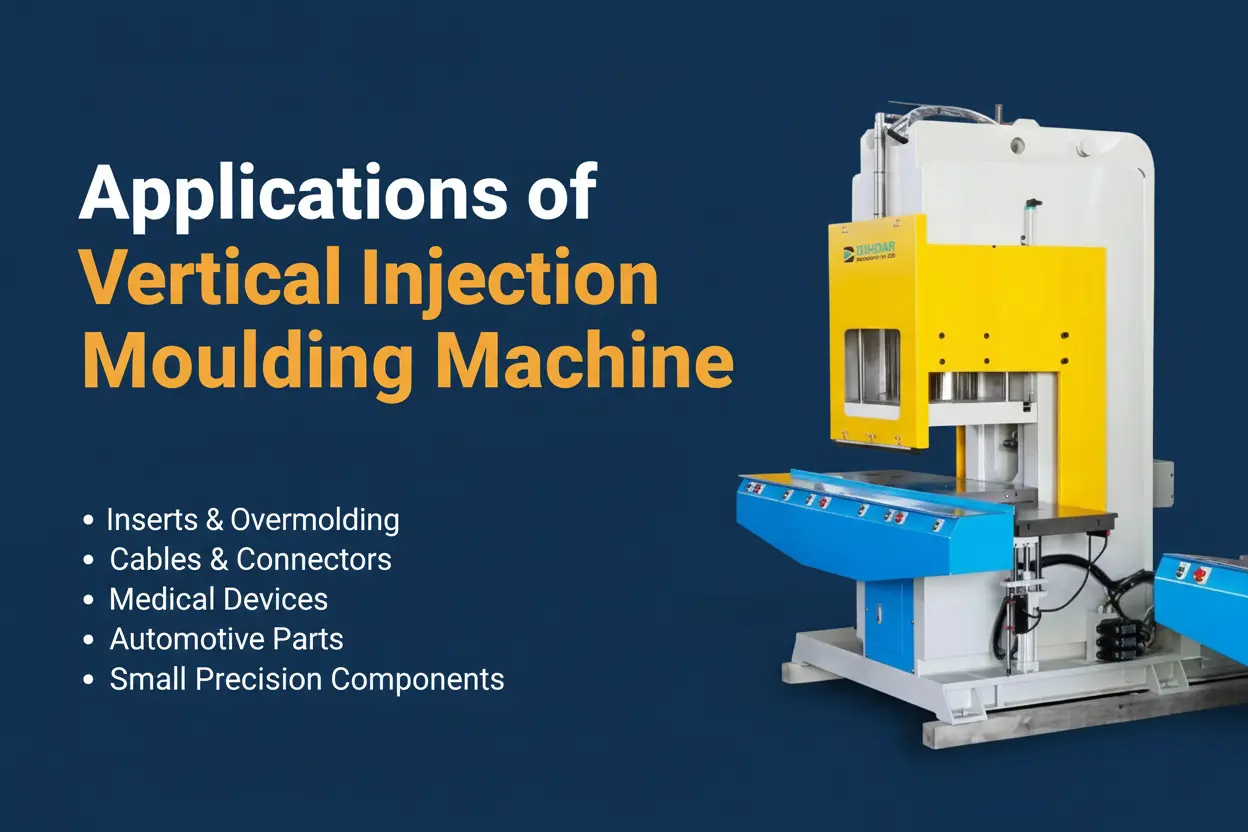
6 Applications Perfect for Vertical Injection Moulding Machines
Precision, space efficiency, and reliability are key in modern manufacturing. Horizontal injection moulding machines are common, but they may not suit applications requiring precise insert placement, multi-material moulding, or compact production.
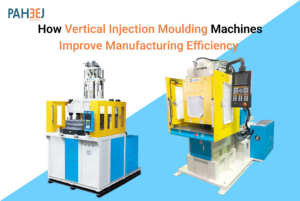
Vertical Injection moulding machines address these challenges with a smaller footprint, gravity-assisted alignment, and superior control over complex or delicate components. Their design makes them especially effective in industries where accuracy, bonding consistency, and integration with automation are critical.
Below are six applications where vertical Injection moulding machines deliver exceptional performance.
1. Insert Moulding for Electrical Connectors
Electrical connectors and PCB-mounted components rely on insert moulding for stable, conductive, and accurate assemblies. Vertical machines support this with their vertical clamping, ensuring proper insert placement.
Key advantages include:
- Accurate insert alignment: Gravity naturally stabilises inserts, minimising movement during injection and reducing the risk of misalignment or short shots.
- Better use of production space: Vertical systems allow multiple machines to operate within a compact layout, improving overall plant productivity without expanding floor area.
- Dimensional consistency: The moulding process yields connectors with tight tolerances for electrical continuity and reliability.
- Easy automation integration: Robots can load inserts and remove finished parts with minimal handling, ensuring steady output and fewer manual errors.
These strengths make vertical moulding the top choice for connector and electronic component manufacturers.
2. Overmoulding for Medical Device Components
Medical products combine rigid substrates and soft surfaces for comfort and hygiene. Vertical moulding machines keep substrates secure for precise overmoulding of grips, plungers, and components.
Critical benefits for medical production:
- Reliable bonding: Fixed substrates throughout the cycle improve adhesion between elastomers and rigid polymers.
- Cleanroom-ready architecture: Their upright configuration supports contamination-free production, essential for medical-grade components.
- Shorter, more predictable cycle times: Ideal for high-volume medical environments where demand and consistency are critical.
- Reduced interface defects: Stable overmoulding conditions minimise warpage, delamination, or cosmetic flaws at material junctions.
Medical device manufacturers rely on vertical systems for precise, repeatable, and contamination-free moulding.
3. Automotive Interior Trim Systems
Automotive interiors demand complex shapes and surface finishes. Vertical moulding machines handle decorative inserts and dashboard trim effectively.
Automotive manufacturing advantages:
- Optimised floor space usage: Their compact footprint frees up room for auxiliary equipment, inspection stations, or additional tooling setups.
- Cleaner surface quality: The machine’s alignment and moulding precision reduce weld lines, flow marks, and other cosmetic defects common in interior trim.
- Flexible production capabilities: Quick tooling changeovers support frequent updates for different trim levels or model variations.
- Reliable for high volumes: Vertical machines provide consistent performance throughout long cycles.
These features enable automotive suppliers to meet strict quality standards while remaining efficient.
4. Consumer Electronics Enclosures
Thin-wall housings for smart devices and wearables require precision moulding and often incorporate metal inserts for added strength. Vertical Injection moulding machines support these applications with stable filling behaviour and excellent mould control.
Advantages for electronics manufacturing:
- Consistent thin-wall accuracy: Stable mould positioning ensures uniform wall thickness, critical for structural integrity and component fit.
- Excellent automation compatibility: Robots can place metal inserts or frames with remarkable precision, enabling high-speed, repeatable workflows.
- Lower energy consumption: Many vertical systems are optimised for efficient operation, helping manufacturers meet sustainability targets.
- Superior aesthetics: Smooth finishes and fewer imperfections support a premium electronics look.
Vertical systems are well-positioned to meet the evolving demands of miniaturised, design-focused electronic products.
5. Packaging Closure Systems
For packaging like bottle caps and seals, accuracy and high output matter. Vertical moulding simplifies the integration of liners, seals, and inserts for consistent runs.
Advantages in packaging:
- Reliable placement: Vertical clamping ensures closures meet sealing and safety standards.
- Space-efficient production lines: Multiple machines can operate in a compact layout, enabling large-scale output without facility expansion.
- Flexible setups: Quick changeovers enable efficient switching between closure types.
- Material optimisation and waste reduction: Controlled moulding processes minimise scrap, improving cost-efficiency for high-volume runs.
Vertical Injection Moulding Machines support packaging industry needs for high-volume, consistent, cost-effective production.
6. Appliance Controls and Ergonomic Grips
Consumer appliances, handheld tools, and lifestyle products often require soft-touch grips moulded over rigid frames. Vertical Injection moulding machines ensure the substrate remains firmly in place, enabling consistent overmoulding that enhances durability and user comfort.
Advantages for appliance and tool makers:
- Strong, consistent overmold adhesion: Substrates remain securely in place, enabling uniform bonding with soft-touch materials.
- Lower maintenance and smoother operation: Vertical configurations experience less wear on certain mechanical components, reducing downtime.
- Supports complex combinations: These machines handle diverse polymers for unique textures and finishes.
- Enhanced visual and tactile consistency: The final product features a clean, high-quality look that aligns with brand expectations and user comfort.
Brands that prioritise ergonomics, durability, and refined finishes choose vertical moulding technology.
Conclusion
Vertical injection moulding machines deliver precision, space savings, and multi-material capabilities. Whether for insert moulding, overmoulding, thin-wall parts, or closures, they provide the accuracy, reliability, and stability industries need.
At Paheej Machinery, we supply advanced vertical injection moulding machines engineered to support these demanding applications. Our equipment helps manufacturers enhance product quality, reduce defects, and optimise production space with reliable, high-performance moulding technology.
Frequently Asked Questions (FAQs)
1. What is a vertical injection moulding machine used for?
A vertical injection moulding machine is primarily used for insert moulding and overmoulding applications. It is widely used in automotive, electronics, medical devices, packaging, and consumer products where precise insert placement and high-quality moulded parts are required.
2. Why choose a vertical injection moulding machine over a horizontal machine?
Vertical injection moulding machines offer better insert alignment, a smaller footprint, and easier automation integration. They are ideal for moulding parts with metal inserts, electrical connectors, and multi-material components, while horizontal machines are generally preferred for high-volume standard plastic production.
3. Which industries benefit most from vertical injection moulding machines?
Industries such as automotive, electronics, medical manufacturing, aerospace, packaging, and consumer goods benefit significantly from vertical injection moulding technology due to its precision, reliability, and efficient use of production space.
4. Can vertical injection moulding machines support automation?
Yes. Vertical injection moulding machines can easily integrate with robotic systems for insert loading and part removal. This improves production efficiency, reduces manual errors, and helps manufacturers achieve consistent product quality.
5. What are the main advantages of vertical injection moulding machines?
Key advantages include accurate insert moulding, space-saving design, improved product quality, lower labour requirements, faster production cycles, and the ability to produce complex, high-precision components across various industries.