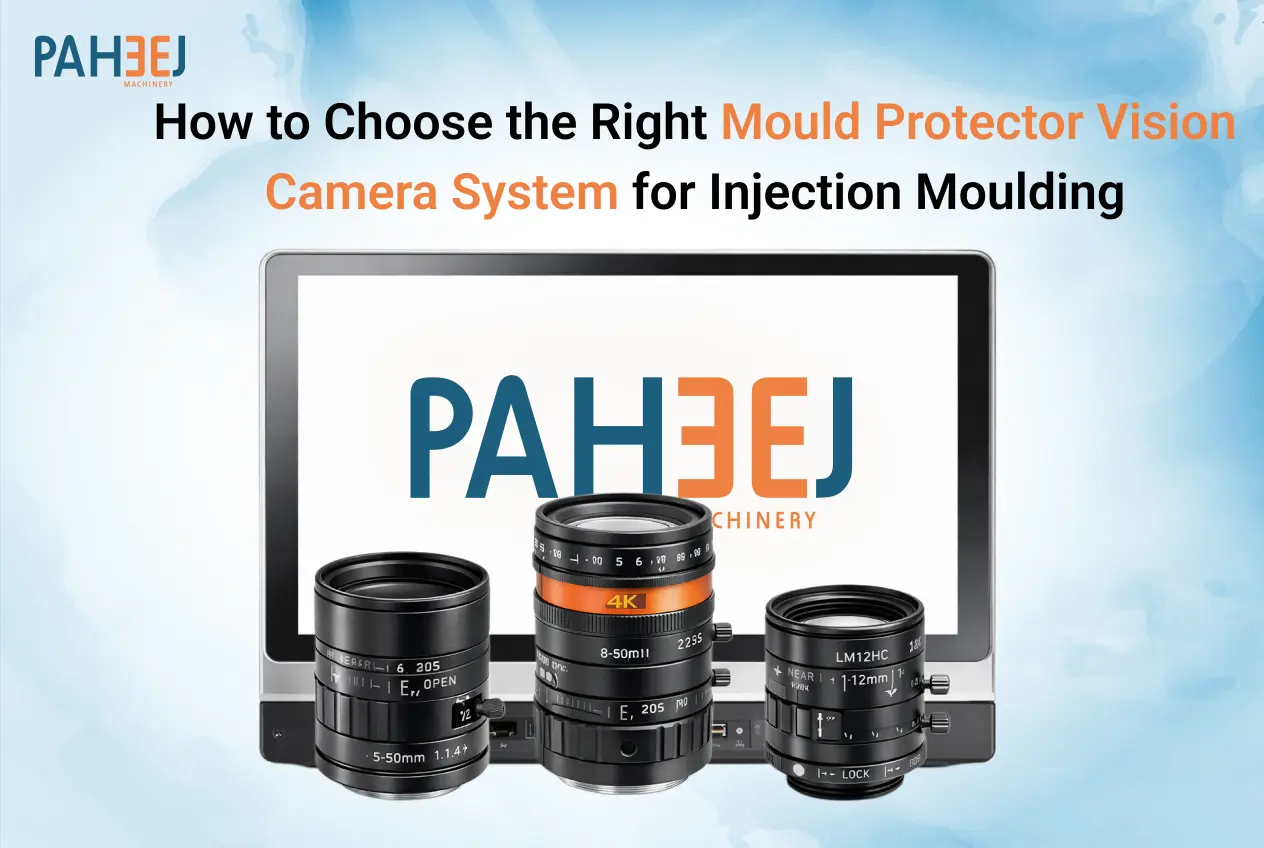
How to Choose the Right Mould Protector Vision Camera System for Injection Moulding
It usually starts small. A part doesn’t fully eject and gets left behind in the cavity. The next cycle crushes it into the mould face, and by the time anyone notices, you’re not just scrapping parts — you’re looking at mould repair, unplanned downtime, and a very uncomfortable conversation with a customer about a missed shipment.
A Mould protector vision camera system is built to catch these problems before they turn into expensive ones. But not every system is built the same way, and not every one suits every mould, machine, or production line. Pick the wrong one, and you end up with false alarms, missed issues, or a system nobody trusts enough to actually use.
This guide walks through what a Mould protector vision camera system for injection moulding actually does, what to look for before you buy one, and the mistakes that quietly waste manufacturers’ money every year.
Key Takeaways
- Choosing the right mould protector vision camera system directly affects scrap rate, mould life, and line efficiency.
- A vision system works by capturing images of the mould cavity or part each cycle and comparing them against a reference or set of rules.
- Camera resolution should be matched to the smallest defect that needs to be caught reliably, not chosen based on the highest spec number.
- Inconsistent lighting is one of the biggest causes of false rejects and missed defects, making dedicated lighting design essential.
- Retained-part detection and standard quality inspection serve different purposes, and most production lines eventually need both.
- Multi-cavity moulds require higher resolution, more processing power, and cavity-by-cavity defect tracking to avoid missed faults.
What Is a Mould Protector Vision Camera System for Injection Moulding?
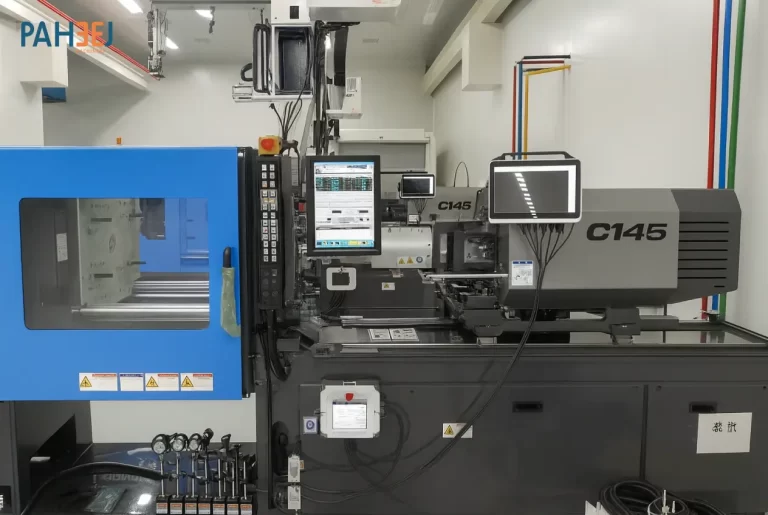
A Mould protector vision camera system is a camera-based inspection setup mounted on or near the moulding machine. It captures images of the mould cavity, the finished part, or the ejection area during each cycle, and compares what it sees against a reference image or a set of rules.
If something doesn’t match — a part is missing, an insert is out of place, or a previous part is still sitting in the cavity — the system flags it or stops the machine before damage happens. In practice, it does the job a human inspector would do, except it does it every single cycle, without fatigue, at speeds no person could match.
At its core, the system is made up of a few essential components working together: one or more industrial cameras positioned to view the mould or part, lighting suited to the material, colour, and mould geometry, a processing unit that analyses each image, and an interface that communicates with the injection moulding machine’s PLC. These parts have to work together as one unit — a high-end camera with poor lighting will still miss defects, and clever software connected to a slow camera will always lag behind a fast-cycling machine.
Why Choosing the Right System Matters
It’s tempting to treat a vision system as a one-time purchase decision — pick something within budget, install it, move on. In practice, the choice affects three things every production manager cares about. It affects scrap rate, because a system that misses defects lets bad parts reach packing, or worse, the customer. It affects mould life, because a slow or poorly positioned camera can’t stop the machine in time to prevent a retained part or foreign object from crushing the mould cavity. And it affects line efficiency, because a system prone to false triggers stops a healthy machine unnecessarily, which erodes trust and eventually gets switched off by frustrated operators.
The right Mould protector vision camera system pays for itself in avoided mould repairs and reduced scrap within months. The wrong one becomes an expensive accessory that nobody relies on.
Key Factors to Consider Before Selecting a System
Before comparing specific products, it helps to be clear on what your process actually needs. It’s worth asking upfront what you are inspecting for — part presence, defects, insert position, or all three — and how many cavities your mould has, and whether that number changes often. Cycle time matters too, since it determines how fast the system needs to make a decision. You’ll also want to know which machine brand and controller you’re integrating with, and whether you need historical data for traceability and audits.
These answers shape almost every other decision below, so it’s worth writing them down before contacting any vendor.
Camera Resolution and Image Quality
Resolution decides how small an irregularity the system can actually see. A camera with too few pixels might miss a hairline surface imperfection or a fine edge defect on a thin-walled part, especially on small components or fine features like snap-fits and ribs.
That said, higher resolution isn’t automatically better. More pixels mean more data to process per frame, which can slow the system down if the processing hardware isn’t matched to it. The practical approach is to size resolution to the smallest defect you need to catch reliably, not to the highest number on a spec sheet.
Image quality also depends on lens selection, focus distance, and how much the part or mould vibrates during ejection. A system tested only in a demo booth may behave very differently once mounted on a machine running a 6-second cycle.
Lighting and Inspection Conditions
Lighting is where many vision projects quietly fail. Injection moulding environments are inconsistent — machine oil, ambient shop light, part colour, and even the gloss level of the plastic all affect what the camera actually sees.
A dark component under harsh overhead light can look completely different from the same part under the vision system’s dedicated lighting, and inconsistent lighting is one of the biggest causes of false rejects and missed defects. It generally works better to use dedicated, consistent lighting rather than relying on ambient shop light, to match lighting angle and colour to the part’s material and finish, to shield the inspection zone from glare, shadows, and stray reflections, and to re-validate lighting whenever the part colour or resin changes.
A system that performs well in one lighting setup can fail in another, so lighting design deserves as much attention as the camera itself.
Detection of Visual and Dimensional Defects
Beyond mould protection, many systems are also configured to look for visual or dimensional irregularities on the finished part. Exactly which defect types a given setup can reliably catch depends heavily on how it’s calibrated, the camera resolution, and the lighting for that specific mould and material — so it’s not something to assume out of the box.
Rather than take a vendor’s general claims at face value, it’s worth asking directly which defect types have actually been validated on parts and materials similar to yours, and asking to see the system flag a known issue on a sample part before you commit.
For a closer look at common defect types in injection moulding and how detection approaches vary, this breakdown of injection moulding defects and vision camera detection is a useful starting point.
Part Presence and Ejection Verification
Beyond checking part quality, a vision system also needs to confirm two simpler but equally important things: that a part actually exists, and that it has actually left the mould.
This matters because an incomplete ejection is one of the most common causes of mould damage. If a part or a broken piece of it stays behind in the cavity and the mould closes on the next cycle, the result is a damaged cavity, damaged core pins, or in worse cases, a damaged machine platen. A good part-presence check confirms that every expected cavity produced a part, that the part has fully separated from the runner or sprue, and that nothing remains in the cavity after ejection.
This is one of the simplest checks a vision system performs, but it’s also one of the highest-value ones, because the cost of missing it is measured in mould repair bills, not scrap parts.
Mould Protection and Retained-Part Detection
This is where a mould protection system earns its keep. Retained-part detection specifically looks for anything left inside the mould after the ejection cycle — a stuck part, a broken runner, a loose insert, or even a foreign object — and stops the machine before the next clamp closes on it.
Without this check, a single missed ejection can turn a routine cycle into a multi-day mould repair. This is exactly why more manufacturers are treating vision camera systems for mould protection as standard equipment rather than an optional add-on, and why a dedicated mould protector camera system is often considered alongside general inspection cameras rather than as a substitute for one.
The two aren’t the same thing, and it’s worth being clear on the difference: a general inspection camera checks part quality, while a mould protector is specifically tuned to react fast enough to prevent physical damage. Many production lines eventually need both.
Insert and Component Position Verification
For moulds that use metal inserts, threaded bushings, or pre-placed components, position matters as much as presence. An insert that’s tilted, seated incorrectly, or missing entirely can result in a part that looks fine externally but fails functionally — or worse, damages the mould when it closes on a misaligned insert.
A vision system checking insert position needs to look at the cavity before the shot, not just the part after it. This means the camera, lighting, and timing all have to be configured for a pre-fill inspection step, which is a different job from post-ejection part checking, even though it may run on the same hardware.
Single-Cavity vs Multi-Cavity Inspection
A single-cavity mould only needs one inspection zone, which keeps the system relatively straightforward. Multi-cavity moulds are a different challenge entirely — the system has to inspect every cavity, every cycle, without slowing down the machine or missing a defect in cavity 12 because it was busy checking cavity 3. More cavities generally mean higher resolution or multiple camera angles, and processing power needs to scale so inspection time doesn’t add to cycle time. The software also needs to track and report defects by individual cavity number, not just as a batch.
If your production runs both single- and multi-cavity moulds, ask any vendor directly how their system scales, rather than assuming a system built for 4 cavities will comfortably handle 32.
High-Speed Injection Moulding Requirements
Fast-cycling processes — thin-wall packaging, caps and closures, or high-volume automotive components — leave very little time for a vision system to capture an image, process it, and send a decision back to the machine controller before the next cycle starts.
In these environments, a system that’s technically capable but too slow is effectively useless. It either becomes a bottleneck that slows the machine down to match its own processing speed, or it gets bypassed entirely by operators trying to hit production targets.
This is a large enough challenge that it deserves its own dedicated approach. For manufacturers running short cycles, this guide on vision-based mould protection for high-speed injection moulding covers what actually changes when cycle times drop below a few seconds.
Machine Compatibility, Integration, and Response Time
A Mould protector vision camera system doesn’t operate in isolation — it needs to talk to the injection moulding machine’s controller in real time. Before choosing a system, it’s worth confirming which machine brands and controller types, such as Euromap interfaces, the system supports, whether it can trigger a machine stop directly or only send an alert, how it fits physically around existing tooling, robots, and safety guarding, and whether adding the system requires machine downtime for installation and calibration.
Response time — the gap between the camera capturing an image and the system acting on it — matters just as much as compatibility. For part-quality checks, a slightly slower response might just mean a delayed alert. For mould protection, it’s the difference between stopping the machine in time and not. A system that can’t communicate directly with your machine’s injection system and safety circuit is, at best, a monitoring tool, not a protection tool.
Real-time visibility matters too — operators and quality engineers benefit from seeing live camera feeds, recently flagged images, and system health at a glance, rather than only being notified after something has already gone wrong.
Data, Traceability, and Quality Monitoring
A Mould protector vision camera system generates a lot of useful data beyond the pass/fail decision on each part. Over time, this data becomes valuable for spotting trends — a specific cavity that fails more often, an issue rate that creeps up after a material change, or a pattern tied to shift changes or ambient temperature. It’s worth storing inspection images and results tied to batch, shift, and cavity number, keeping historical data exportable for audits and customer quality reports, setting up trend alerts rather than just single-part rejects, and retaining records long enough to support root-cause investigations.
An injection moulding inspection system without usable data is really just an alarm. With good data logging, it becomes a tool for continuous improvement.
How to Compare Different Mould Protector Vision Camera Systems
Specification sheets rarely tell the whole story. When comparing vendors or systems, it’s worth going beyond resolution and price to ask more practical questions — whether you can see the system running on a mould similar to yours rather than just a demo part, what the actual response time is under your cycle time rather than a theoretical best case, how the system is configured for a new mould and whether that needs a specialist or can be done by your own team, what happens when lighting conditions change on the shop floor, and what support and spare-parts availability exists locally.
A system that looks identical to a competitor’s on paper can behave very differently once it’s mounted on your machine, running your material, on your cycle time. Wherever possible, ask for a trial or a site visit before committing.
Common Mistakes When Selecting a System
A few mistakes come up again and again when manufacturers select a vision system. One is buying on resolution alone — a high-resolution camera with poor lighting or slow processing still misses defects. Another is ignoring cycle time, since a system that can’t keep up with a fast machine becomes a bottleneck or gets disabled entirely. Many teams also treat quality inspection and mould protection as the same thing, when they often need different camera positions, timing, and response logic.
Skipping integration checks is another common trap, because a system that can’t communicate with the machine controller can’t stop it in time. Underestimating lighting changes is just as risky — a system validated once and never rechecked will drift out of accuracy as parts, colours, or shop conditions change. And finally, having no plan for multi-cavity scaling can be costly, since a system that works well for a 4-cavity mould may not scale cleanly to 32 cavities without redesign.
Practical Checklist for Choosing the Right System
Use this as a working checklist when evaluating vendors or systems:
- Defined what you’re inspecting for: defects, presence, position, or protection
- Matched camera resolution to your smallest critical defect size
- Designed dedicated lighting for your part colour and material
- Confirmed response time under your actual cycle time, not a demo cycle
- Verified compatibility with your machine brand and controller
- Checked scalability for single- and multi-cavity moulds
- Confirmed the system can trigger a direct machine stop for mould protection
- Reviewed data logging and traceability features
- Asked for a trial run or reference site on a similar mould
- Clarified installation time, training needs, and local support
Conclusion
Choosing a Mould protector vision camera system for injection moulding isn’t really about picking the camera with the most impressive spec sheet. It’s about matching resolution, lighting, speed, and integration to the specific problems your production line actually has — whether that’s verifying part ejection, spotting a retained part, or protecting an expensive mould from a crash.
At Paheej Machinery, this is the exact problem the team works on daily — building vision-based mould protection and inspection systems designed around how real injection moulding lines actually run, not just how they perform in a demo. If you’re evaluating a system for your own production, it’s worth starting with the checklist above and working through it against your specific mould, machine, and cycle time before making a decision.
Frequently Asked Questions (FAQs)
. What does a Mould protector vision camera system for injection moulding actually do?
It inspects the mould cavity and part during every cycle, checking part presence, ejection, and correct positioning, and can stop the machine before a problem causes mould damage.
Can a Mould protector vision camera system detect a part that hasn't fully ejected?
Yes — this is one of its core functions. It checks the cavity after each cycle to confirm ejection was complete before the mould closes again, which is one of the most common causes of preventable mould damage.
How is a mould protection system different from a standard inspection camera?
A mould protection system focuses on stopping the machine fast enough to prevent damage from a retained part. A standard inspection camera checks part quality after ejection. Many lines use both together.
Can one Mould protector vision camera system handle a multi-cavity mould?
Yes, if it’s sized correctly — with enough resolution and processing power to check every cavity within the cycle time and report results by cavity number.
How does Paheej Machinery help me choose the right Mould protector vision camera system for injection moulding?
Paheej Machinery matches a system to your actual mould, machine, and cycle time, configuring mould protection and inspection needs around your specific production line rather than offering a generic setup.