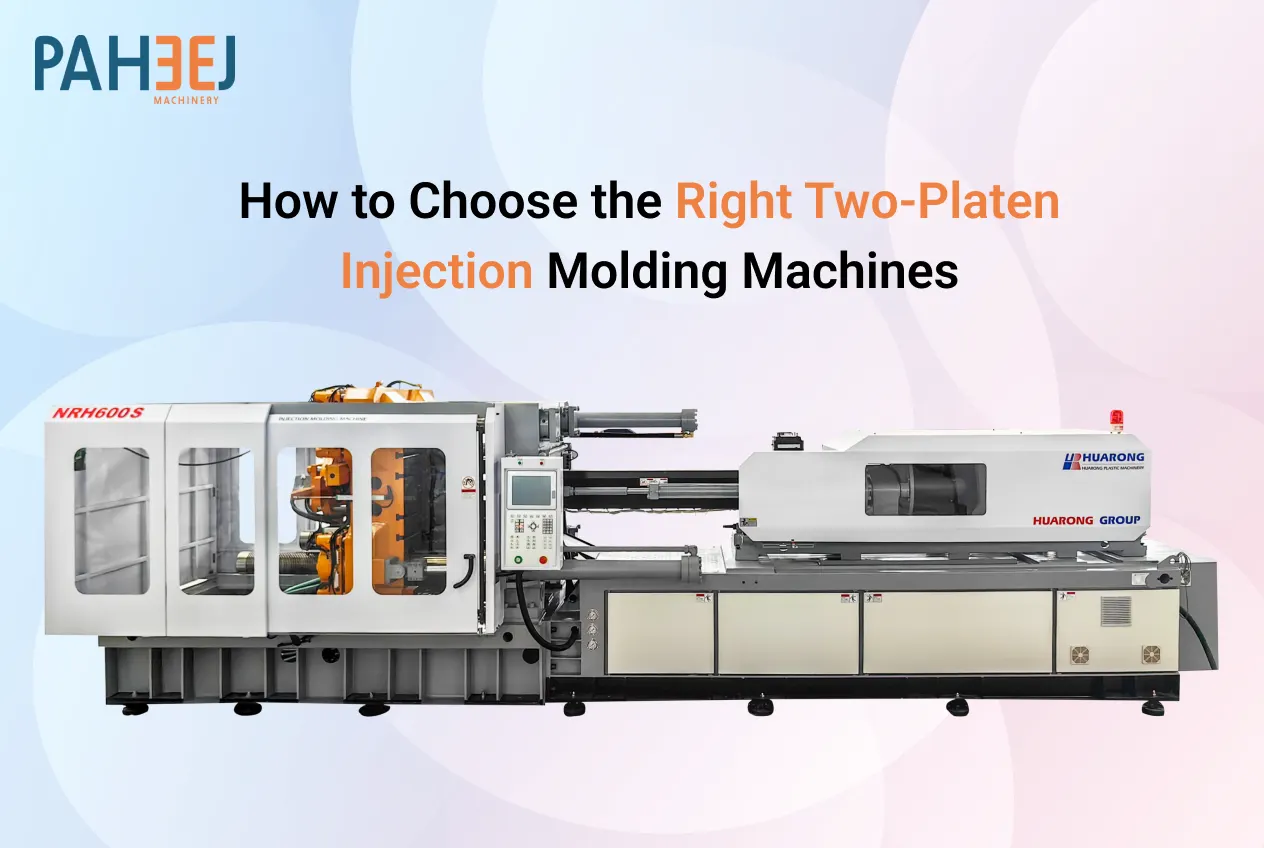
How to Choose the Right Two-Platen Injection Molding Machines
Demand for large-scale injection molding continues to grow across automotive, industrial, and packaging sectors. As part sizes increase and production expectations tighten, machine selection becomes one of the most important decisions a manufacturer can make.
Choosing the right two-platen injection molding machine directly affects part quality, cycle consistency, and long-term operating costs. The right machine supports your molds, production volume, and future expansion plans. The wrong one creates inefficiencies that increase over time.
This guide outlines the key factors manufacturers should evaluate before investing in a two-platen injection molding machine.
Understand Your Production Requirements First
Before evaluating machine specifications, manufacturers should clearly define their production requirements.
Part Size and Product Type
Part size and product design establish the foundation for machine selection. Large industrial components, automotive panels, or thick-walled structural parts require significantly higher clamping force and shot capacity than smaller technical products.
Understanding part geometry, wall thickness, and material flow requirements early helps avoid machine sizing issues later in the process.
Production Volume Expectations
Production volume influences machine configuration and operational requirements. High-volume manufacturing environments typically require stable cycle performance, automation compatibility, and reliable hydraulic operation over long production runs.
Lower-volume or multi-product operations may place greater importance on flexibility during mold changes and production setup.
Material Processing Requirements
Material characteristics also affect machine selection. Resin type, melt temperature, shot weight, and injection speed all influence the required machine configuration.
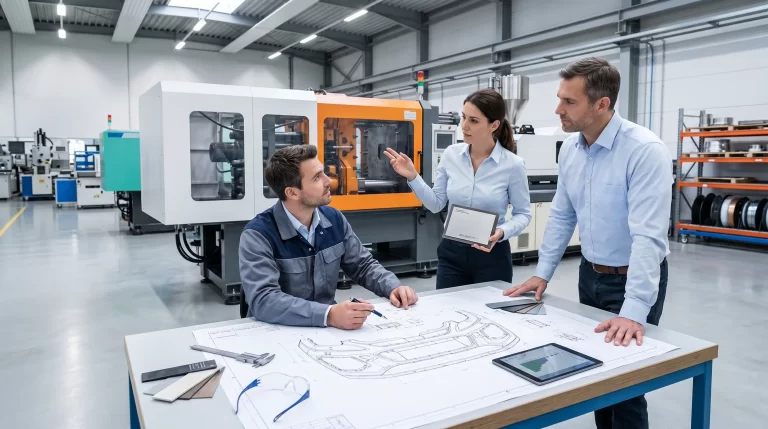
Choosing the Right Two-Platen Injection Molding Machine Capacity
Matching Clamping Force to Mold Requirements
Clamping force should match the mold’s projected area and cavity pressure requirements. Insufficient tonnage can lead to flash, dimensional variation, and mold stress, while excessive tonnage increases energy consumption and operating costs unnecessarily.
For large-part applications, two-platen injection molding machines in the 1,000 to 5,000-ton range are commonly used, though the correct selection depends entirely on mold specifications and production requirements.
Shot Capacity and Injection Performance
Injection capacity should support complete cavity filling without operating near machine limits.
Manufacturers should evaluate:
- Shot capacity
- Injection pressure
- Injection speed
- Material flow requirements
These factors directly affect part consistency and molding stability.
Mold Opening Stroke and Daylight
Large molds and deep components require sufficient mold opening stroke and daylight clearance.
Underestimating opening requirements can create limitations during part ejection, maintenance access, or mold installation. Evaluating these dimensions early helps prevent costly compatibility issues.
Check Mold Compatibility Carefully
A machine may meet tonnage requirements while still being incompatible with the tooling.
Platen Size and Tie-Bar Spacing
Platen dimensions and tie-bar spacing determine whether the mold physically fits within the machine structure.
Two-platen injection molding machines typically offer wider platen dimensions relative to tonnage compared to toggle systems, making them well-suited for large molds and oversized tooling applications.
Manufacturers should confirm adequate clearance around the mold with sufficient operating margin.
Mold Weight Handling
The machine structure must safely support mold weight during long production runs. Insufficient mold support can contribute to platen deflection, uneven clamping, and premature wear.
Future Tooling Flexibility
Future production plans should also be considered when selecting machines. Choosing a machine with flexibility for additional molds or larger tooling can help avoid future equipment limitations.
Consider Factory Layout and Space Efficiency
One of the advantages of two-platen injection molding machines is that they generally occupy less machine length than equivalent-tonnage toggle systems.
Before finalising machine selection, manufacturers should evaluate:
- Available floor space
- Ceiling clearance for mold handling
- Material flow paths
- Maintenance accessibility
- Space for robots and automation systems
Efficient production cell planning often improves overall productivity as much as the machine specification itself.
Evaluate Automation and Production Integration
Modern injection molding operations increasingly depend on automation for production consistency and labor efficiency.
Robot Compatibility
Part removal robots, insert loading systems, and automated inspection equipment require proper machine accessibility and integration capability.
The open structure of two-platen machines often improves robot access around the mold area and production cell.
Smart Control Systems
Machine control systems should support:
- Process monitoring
- Cycle data logging
- Alarm management
- Parameter tracking
These features improve process visibility and help operators identify variations before they affect production quality.
Future Expansion Planning
Long-term scalability is another important consideration. Machines that support future automation upgrades or additional peripherals provide greater long-term operational value.
Focus on Machine Stability and Long-Term Reliability
Machine rigidity plays an important role in large-part injection molding operations.
Two-platen hydraulic clamping systems provide uniform clamping force distribution across the platen surface, helping maintain mold alignment and process consistency during long production runs.
Structural rigidity also helps protect tooling by reducing unnecessary stress and platen deflection under high loads.
Reliable hydraulic systems and machine components minimize unplanned downtime, which is especially important in high-volume manufacturing environments where production interruptions directly affect output and operating costs.
Energy Efficiency and Operating Cost Considerations
Initial purchase price is only one part of the total investment evaluation.
Hydraulic System Efficiency
Modern hydraulic systems used in two-platen injection molding machines have improved significantly in energy efficiency. Servo-driven hydraulics and variable-displacement pumps reduce unnecessary power consumption during non-peak cycle stages.
Production Efficiency and Scrap Reduction
Stable molding conditions also improve operational efficiency by reducing process variation, scrap generation, and rework requirements.
Long-Term Cost Evaluation
Manufacturers should evaluate:
- Energy consumption
- Maintenance intervals
- Cycle efficiency
- Scrap rates
- Estimated operating costs over machine life
Lower purchase cost does not always translate into better long-term value.
Evaluating Long-Term Machine Support
The supplier behind the machine plays an important role in long-term operational success.
Key factors to assess include:
- Technical support availability
- Machine customization capability
- Spare parts lead times
- Service responsiveness
- Experience with large-scale molding applications
A supplier that understands production challenges beyond machine specifications can provide valuable long-term operational support.
Conclusion
Selecting the right two-platen injection molding machine requires careful evaluation of production requirements, mold compatibility, machine capacity, automation goals, and long-term operating costs. As demand for large-part and high-volume injection molding continues to grow, two-platen systems have become a preferred solution for manufacturers seeking space efficiency, stable clamping performance, and scalable production capability.
A properly selected two-platen injection molding machine supports long-term manufacturing efficiency, reliable part quality, and consistent production performance across demanding industrial applications.
Paheej Machinery supports manufacturers with advanced injection molding solutions designed for stable, efficient, and high-performance production across modern manufacturing environments.
Frequently Asked Questions (FAQs)
1. What is a two-platen injection molding machine, and when should you choose one?
A two-platen injection molding machine is designed for large molds and high-tonnage applications. It is ideal for automotive, appliance, and industrial plastic parts, offering a compact design and efficient production.
2. How do you choose the right two-platen injection molding machine capacity?
Choose based on mold size, clamping force, shot weight, injection pressure, and production requirements. Proper sizing improves product quality and operational efficiency.
3. What are the main benefits of a two-platen injection molding machine?
Key benefits include space savings, support for large molds, consistent clamping force, easy automation integration, and reliable high-volume production.
4. Two-platen vs. toggle injection molding machine: Which is better?
Two-platen machines are better for large molds and high clamping forces, while toggle machines are suitable for smaller parts and faster cycle times.
5. What mistakes should you avoid when selecting a two-platen injection molding machine?
Avoid focusing only on tonnage. Consider mold compatibility, opening stroke, energy efficiency, maintenance costs, and future production needs.