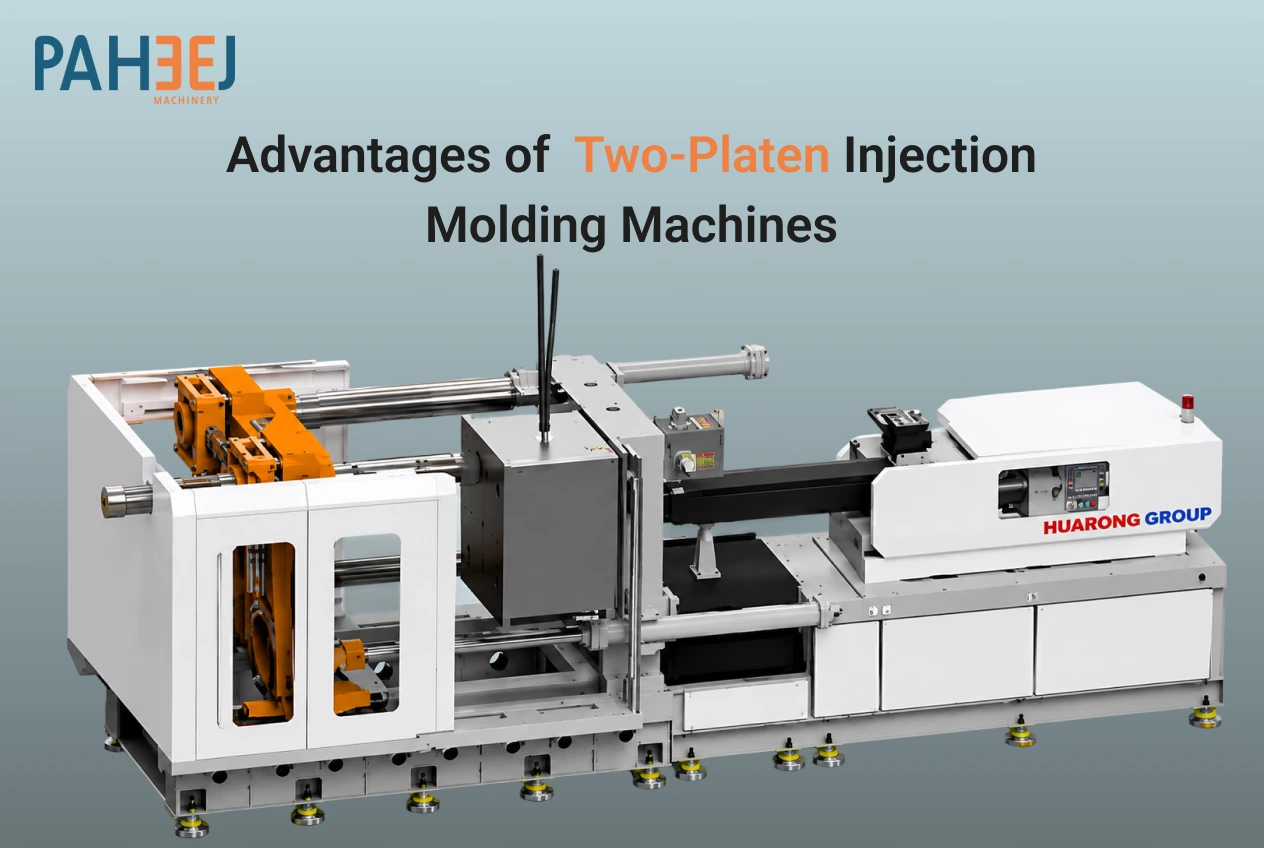
Advantages of Two-Platen Injection Molding Machines
Growing demand for large plastic components and high-volume production continues to drive manufacturers toward injection molding equipment capable of handling substantial mold sizes, stable operation, and efficient production performance. Traditional toggle-based systems can face limitations when processing large molds and heavy-duty applications that require high clamping force.
Two-platen injection molding machines provide a practical solution for these demanding production requirements. Their simplified structural design, direct hydraulic clamping, and compact configuration offer several operational advantages for large-tonnage molding applications.
Compact Machine Structure for Better Space Utilization
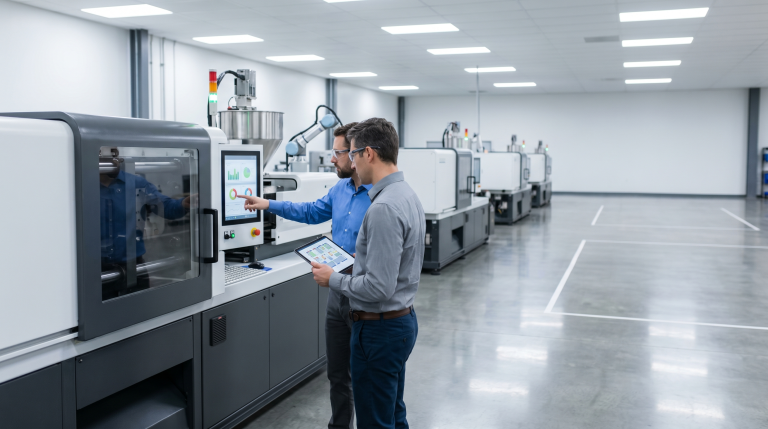
The two-platen injection molding machines have a platen structure that eliminates the large toggle mechanism found in conventional injection molding machines. This simplified design reduces overall machine length, creating a compact footprint that occupies less production floor space.
Manufacturers can utilize available factory space more efficiently or install additional equipment within existing facilities. This becomes particularly valuable in production environments where floor space directly affects operational planning and expansion.
Improved Factory Layout Flexibility
Compact machine dimensions support more efficient production layouts while maintaining proper access for operation and maintenance activities.
The reduced footprint also simplifies integration into automated production environments by minimizing space limitations around robotic systems and material handling equipment.
High Clamping Force for Large Molding Applications
Consistent Hydraulic Clamping System
Direct hydraulic clamping provides uniform force distribution across the platen surface. Unlike toggle systems that rely on mechanical force multiplication, hydraulic systems maintain controlled pressure throughout the molding cycle.
This consistency is important in high-tonnage molding applications where uneven clamping force can affect part quality or increase mold stress.
Support for Large Mold Sizes
Two-platen machines accommodate large molds through wider platen spacing and extended opening stroke capabilities. This configuration supports tooling dimensions that may exceed the practical range of conventional toggle systems.
The design is also suitable for producing deep parts and thick-walled components that require greater mold opening distance during part ejection.
Better Automation Compatibility
Easier Robot Integration
The open machine structure improves robot accessibility for automated part handling systems. Robots can access the mold area more easily without interference from complex toggle mechanisms.
This layout is especially beneficial for automated part removal, insert loading, and integrated handling systems used in continuous production environments.
Reliable Performance in Automated Production Lines
Two-platen machines support automated manufacturing through consistent cycle operation and simplified mechanical movement. Fewer mechanical linkages help reduce operational interruptions and improve production consistency.
The machine structure also supports long production runs with minimal manual intervention.
Energy and Operational Efficiency
Optimized Hydraulic Operation
Modern hydraulic systems used in two-platen machines improve operational efficiency through controlled pressure management and optimized hydraulic output.
The direct clamping approach reduces unnecessary mechanical movement, contributing to lower energy consumption during production cycles.
Lower Long-Term Operating Costs
Simplified machine structure reduces maintenance requirements by minimizing wear-prone mechanical components.
Improved production consistency also helps reduce material waste, downtime, and scrap generation, contributing to better long-term operating efficiency.
Flexibility Across Different Industries
Two-platen injection molding machines are widely used across industries requiring large plastic component production.
- Automotive: bumpers, dashboards, door panels, and structural components
- Industrial applications: pallets, storage bins, containers, and material handling products
- Appliances: refrigerator interiors, washing machine parts, and housing assemblies
- Packaging: large containers, totes, and heavy-duty packaging products
- Technical components: equipment housings, protective covers, and industrial plastic parts
These applications commonly require large mold dimensions, high clamping force, and stable production performance.
Important Factors Before Choosing a Two-Platen Machine
Production Volume Requirements
Two-platen machines are generally best suited for medium-to-large production environments where manufacturing volumes justify higher-capacity equipment investment.
Mold Size and Part Dimensions
Machine selection should match mold dimensions, projected part area, and tooling requirements. Platen size, tie-bar spacing, and daylight opening all influence compatibility.
Automation and Future Expansion
Manufacturers should evaluate future automation plans and long-term production scalability during machine selection.
Machine Reliability and Technical Support
Reliable machine construction and technical support play an important role in maintaining stable long-term production performance.
Growing Role of Two-Platen Machines in Modern Manufacturing
The increasing use of large plastic components across industries continues to drive demand for two-platen injection molding machines. Manufacturers are using larger molded parts to improve assembly efficiency and reduce overall production complexity.
Two-platen systems also support modern manufacturing trends, including automation integration, high-volume production, and process monitoring. Improved hydraulic technologies and machine controls continue to enhance operational performance and production efficiency.
Conclusion
Two-platen injection molding machines offer important advantages for manufacturers producing large plastic components in demanding production environments. Their compact structure, high clamping capability, simplified machine layout, and automation compatibility make them well-suited for large-scale manufacturing applications.
As production requirements continue evolving toward larger molds, higher output, and improved efficiency, two-platen injection molding machines remain a practical solution for stable and efficient molding operations across multiple industries.
Paheej Machinery supports manufacturers with advanced injection molding solutions designed for efficient, reliable, and high-performance production across demanding industrial applications.
Frequently Asked Questions (FAQs)
1. What is a two-platen injection molding machine?
A two-platen injection molding machine uses a fixed platen and a moving platen with direct hydraulic clamping. It is designed for large molds, high-tonnage applications, and efficient production of automotive, packaging, and industrial plastic components.
2. What are the main advantages of two-platen injection molding machines?
Key benefits include a compact footprint, large mold capacity, stable clamping force, easier automation integration, and improved accessibility during mold changes. These advantages help manufacturers increase productivity while optimizing factory space.
3. How do two-platen and three-platen injection molding machines compare?
Two-platen machines are generally more compact, handle larger molds, and require less maintenance due to fewer moving parts. Three-platen systems may be preferred for certain molding applications but often occupy more floor space.
4. Are two-platen injection molding machines energy efficient?
Yes. Modern two-platen machines often use advanced hydraulic and servo-driven systems that reduce energy consumption while maintaining consistent clamping performance and production stability.
5. Which industries benefit most from two-platen injection molding machines?
Industries such as automotive, packaging, appliance manufacturing, logistics, and industrial equipment production benefit most. These machines are ideal for producing large plastic parts that require high clamping force and large mold capacities.