Benefits of All Electric Injection Molding Machines for Modern Manufacturing
Manufacturing industries continue to demand higher precision, faster production cycles, and consistent product quality. Traditional hydraulic machines remain widely used, but many manufacturers are transitioning toward all-electric injection molding technology to meet these evolving requirements.
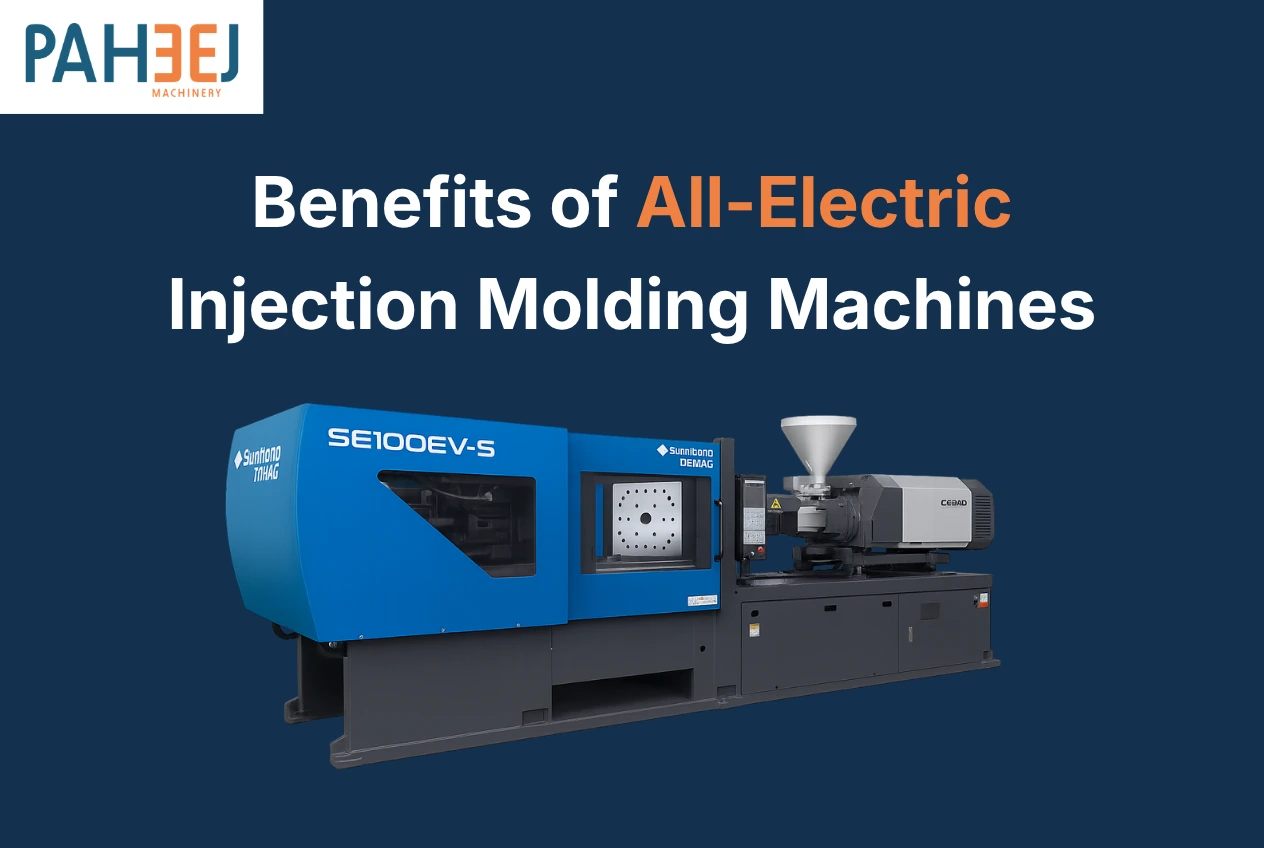
All-electric injection molding machines offer several operational advantages that support modern manufacturing needs. These systems deliver benefits across precision, productivity, quality control, and operational reliability, helping manufacturers address some of the most critical challenges in today’s production environments.
Why Modern Manufacturers Are Adopting All-Electric Injection Molding Machines
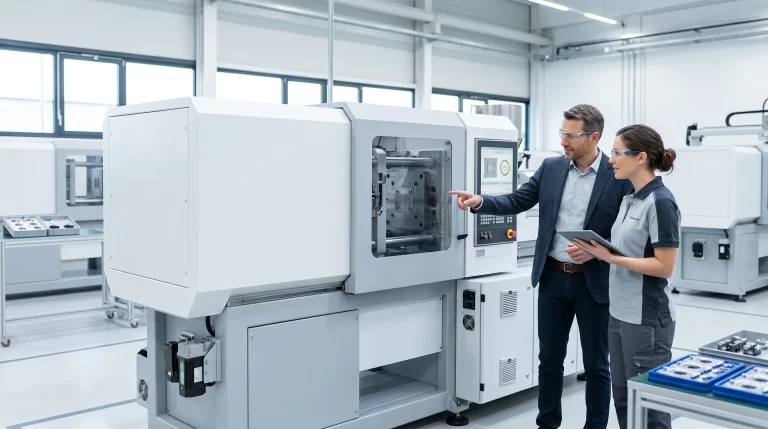
Increasing demand for precision parts with tight tolerances continues to drive the adoption of all-electric technology. Higher-quality expectations, stricter industry requirements, and growing automation initiatives require equipment capable of delivering consistent, repeatable performance.
At the same time, manufacturers are seeking production systems that integrate easily with smart factory environments while maintaining stable output across extended production runs. All-electric injection molding machines address these requirements through precise servo-driven control and superior process repeatability.
Improved Precision and Repeatability
Accurate Servo-Driven Motion Control
All-electric machines utilize servo motors to control clamping, injection, and ejection movements with exceptional accuracy. This precise motion control helps maintain consistent positioning throughout thousands of production cycles.
As a result, manufacturers benefit from improved shot-to-shot repeatability and tighter dimensional control, particularly in applications where precision is critical.
Reduced Process Variation
Stable operating conditions help minimize process fluctuations that can impact product quality. Unlike hydraulic systems that may experience performance variations due to temperature changes or pressure fluctuations, electric systems maintain consistent operation over long production runs.
This improved stability contributes to:
- Better dimensional consistency
- Reduced process drift
- Improved quality control
- Lower scrap generation
These advantages are especially important in industries producing precision components with tight tolerances.
Faster Cycle Times and Higher Productivity
High-Speed Machine Response
Servo-driven systems respond rapidly to control inputs, allowing faster acceleration and deceleration during machine movements. Mold opening, closing, and injection operations can be executed more efficiently, helping reduce overall cycle times.
This responsiveness supports higher throughput while maintaining stable processing conditions.
Consistent Production Performance
All-electric injection molding machines maintain consistent performance throughout extended production runs. Manufacturers benefit from predictable cycle times, stable production output, and reliable scheduling.
Key productivity benefits include:
- Faster machine response
- Consistent cycle performance
- Improved throughput
- Better production planning
These improvements directly increase manufacturing efficiency.
Also read: How Electric Injection Moulding Machines Support Sustainable Manufacturing
Cleaner Manufacturing Environment
No Hydraulic Oil Contamination Risk
One of the most significant advantages of all-electric injection molding machines is the elimination of hydraulic oil systems.
Without hydraulic oil, manufacturers avoid risks associated with:
- Oil leaks
- Fluid contamination
- Cleanup requirements
- Product contamination concerns
This creates a cleaner production environment and simplifies machine maintenance.
Ideal for Sensitive Industries
The clean operation of all-electric systems makes them well suited for industries where contamination control is essential.
Common applications include:
- Medical device manufacturing
- Electronics production
- Packaging applications
- Precision consumer products
These industries often require highly controlled production environments where cleanliness directly impacts product quality.
Lower Maintenance Requirements
Reduced Service Requirements
All-electric injection molding machines contain fewer hydraulic components than traditional systems. The absence of hydraulic pumps, filters, hoses, and oil circuits reduces the need for routine maintenance.
Manufacturers can eliminate:
- Hydraulic oil replacement
- Filter changes
- Leak repairs
- Oil system inspections
This reduces the maintenance workload and improves machine availability.
Improved Equipment Reliability
The simpler mechanical architecture of electric systems contributes to long-term reliability. With fewer wear-prone hydraulic components, manufacturers often experience fewer unexpected maintenance events and reduced downtime.
Benefits include:
- Lower maintenance costs
- Improved machine uptime
- Longer service intervals
- More predictable operation
These advantages support long-term production efficiency and operational stability.
Better Process Control and Product Quality
Stable Injection Performance
Consistent injection control helps maintain uniform cavity filling and material flow throughout production.
Accurate control over injection parameters supports:
- Consistent filling patterns
- Reduced process variation
- Improved molding stability
- Better repeatability
This level of control becomes increasingly important when manufacturing complex or precision components.
Improved Part Consistency
Stable processing conditions directly contribute to improved product quality.
Manufacturers often achieve:
- Reduced defect rates
- Better surface finish quality
- Improved dimensional accuracy
- More consistent product performance
The combination of precise machine control and stable processing helps reduce waste while improving production efficiency.
Strong Compatibility with Automation and Smart Manufacturing
Automation Integration
Modern manufacturing increasingly relies on robotics and automated production systems. All-electric injection molding machines integrate effectively with robotic handling equipment due to their precise and repeatable movements.
Automation compatibility supports:
- Robotic part removal
- Automated material handling
- Consistent cycle execution
- Reduced manual intervention
This improves production consistency and operational efficiency.
Industry 4.0 Connectivity
All-electric systems are well suited for smart manufacturing environments. Advanced control platforms enable real-time process monitoring, production data collection, and system integration with manufacturing execution systems.
Manufacturers can benefit from:
- Process visibility
- Data-driven optimization
- Production monitoring
- Predictive maintenance initiatives
These capabilities support continuous improvement and long-term operational efficiency.
Industries Benefiting Most from All-Electric Injection Molding Machines
Several industries benefit significantly from the precision and consistency that all-electric systems provide.
Medical Industry
Medical manufacturers rely on precise and repeatable production processes to meet strict quality standards and regulatory requirements.
Electronics Manufacturing
Electronics applications often involve small components and tight tolerances that require highly accurate molding performance.
Automotive Components
Automotive manufacturers benefit from the repeatability and process consistency needed for high-volume production of critical components.
Consumer Products
Consumer product manufacturers use all-electric machines to achieve consistent quality, improved efficiency, and reliable production.
Important Considerations Before Investing in an All-Electric Machine
Selecting the right injection molding technology requires careful evaluation of production requirements and long-term manufacturing goals.
Key factors to consider include:
- Production volume requirements
- Product complexity
- Precision and tolerance expectations
- Automation integration plans
- Long-term operating costs
- Future production scalability
A complete investment assessment should consider the total cost of ownership rather than focusing solely on the initial equipment cost.
Supporting the Future of Modern Manufacturing
The adoption of all-electric injection molding technology continues to grow as manufacturers prioritize precision, consistency, automation, and sustainability.
Increasing quality expectations, greater demand for smart manufacturing solutions, and the need for highly repeatable production processes are driving broader implementation of electric molding systems across industries.
As manufacturing evolves, Paheej Machinery supports businesses with advanced all-electric injection molding solutions that deliver reliable performance, efficiency, and precision for modern production requirements.
Conclusion
All-electric injection molding machines deliver significant advantages in precision, productivity, quality control, and operational efficiency. Their ability to provide consistent repeatability, faster cycle performance, cleaner operation, and reduced maintenance requirements makes them a valuable solution for modern manufacturing environments.
For manufacturers focused on precision, repeatability, and long-term production efficiency, all-electric injection molding machines offer a reliable path to improved manufacturing performance.
Paheej Machinery, a trusted electric injection molding machine supplier, supports manufacturers with advanced all-electric injection molding solutions that deliver precision, efficiency, and consistent performance across modern manufacturing applications.