
Slide & Lifter Not Returned: How to Protect Moulds from Damage
Key Takeaways
- Slides and lifters must return completely before every mould closing cycle.
- Mechanical wear, debris, hydraulic problems, and setup errors can prevent proper return.
- Closing the mould with an out-of-position slide or lifter can cause severe tooling damage.
- Traditional detection methods may not identify incomplete slide movement.
- Vision-based mould protection verifies component position before mould closure and helps prevent mould crashes.
- Combining preventive maintenance with automated monitoring improves production reliability and tooling life.
Slides and lifters are essential moving components in many injection moulds, particularly those used for complex part geometries, undercuts, and insert moulding applications. If either component fails to return to its correct position before the mould closes, the result can be severe tooling damage, unexpected machine downtime, and costly production interruptions.
This article explains why slide and lifter return failures occur, the risks they create, and how a vision mould protection system helps prevent mould crashes before they happen.
Understanding Slides and Lifters in Injection Moulds
Slides and lifters are mechanisms that allow moulds to produce parts with features that cannot be formed using a simple opening and closing action.
Slides move horizontally or at an angle to release undercuts and side features before the mould opens. Lifters move upward at an angle during ejection to release internal undercuts or complex geometries without damaging the molded part.
After ejection, both mechanisms must return completely to their original positions before the next mould closing cycle begins. Even a slight misalignment can interfere with mould closure and place excessive force on expensive tooling components. Because modern production lines often operate with short cycle times, there is very little opportunity to identify these problems manually before the machine begins the next cycle.
Why Slides or Lifters Fail to Return
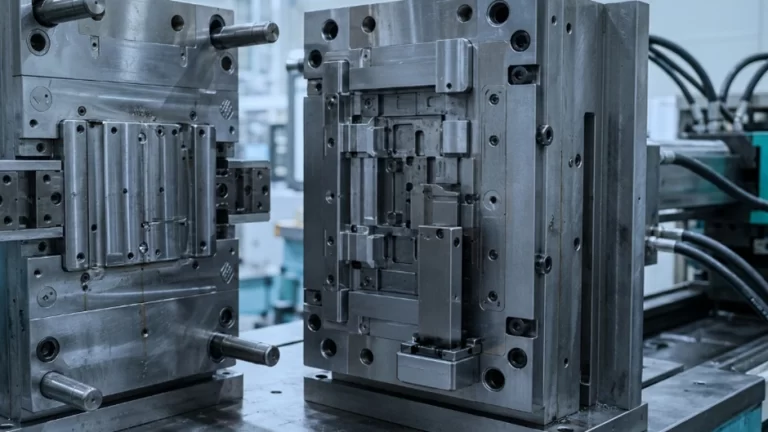
Several factors can prevent slides and lifters from returning correctly. Understanding these causes helps manufacturers reduce the likelihood of mould damage.
1. Mechanical Wear
Like any moving mechanism, slides and lifters experience wear over time. Guide rails, wear plates, pins, and bushings gradually lose precision after repeated production cycles.
Excessive wear may prevent components from completing their full return movement, particularly in high-volume production environments.
2. Foreign Material or Flash
Plastic residue, flash, broken part fragments, or other debris can obstruct slide or lifter movement.
Even a small amount of trapped material can stop a slide from returning fully, creating a condition that may not be visible to operators before mould closure.
3. Hydraulic or Mechanical Malfunctions
Some moulds use hydraulic cylinders or mechanical actuators to drive slide movement.
Problems such as:
- Hydraulic pressure loss
- Cylinder wear
- Timing issues
- Mechanical binding
can prevent complete slide return and increase the risk of mould interference during the next cycle.
4. Human Error During Setup
Incorrect mould setup, maintenance oversights, or manual adjustments can also contribute to slide return failures.
Examples include:
- Improper component assembly
- Incomplete maintenance checks
- Incorrect machine settings
- Failure to verify slide movement before production
Standardized setup procedures help reduce these risks but cannot eliminate them entirely.
Risks of Closing the Mould with a Slide or Lifter Out of Position
A slide or lifter that remains partially extended during mould closing can cause immediate and expensive consequences.
The mould closing force generated by an injection molding machine is extremely high. If moving components are not fully retracted, this force is transferred directly into tooling that was never designed to withstand it.
Potential consequences include:
- Broken slide assemblies
- Bent lifters
- Damaged cores and cavities
- Cracked inserts
- Guide pin damage
- Premature tooling wear
- Machine stoppages
- Costly mould repairs
Beyond tooling damage, manufacturers also face production losses caused by unscheduled downtime, delayed deliveries, additional maintenance, and increased scrap. Implementing automated mould protection solutions helps prevent tooling failures by detecting abnormal slide or lifter positions before the mould closes.
For high-value moulds, even a single mould crash can result in repair costs that far exceed the investment in preventive monitoring systems.
How Vision-Based Mould Protection Prevents Slide and Lifter Damage
A mould protection system using vision technology provides direct visual verification before the mould closes.
Rather than relying only on mechanical signals, the camera confirms that critical mould components have returned to their correct positions. Modern vision mould protection features enable manufacturers to monitor these critical areas automatically, improving inspection accuracy and helping prevent costly mould crashes.
1. Real-Time Position Verification
Vision cameras capture images of designated inspection areas during every production cycle.
The system compares the current image with a predefined reference and verifies that slides and lifters have returned completely before mould closure begins.
This verification occurs automatically without slowing production.
2. Detecting Incomplete Return
Vision systems can identify conditions that traditional sensors may overlook, including:
- Partially returned slides
- Misaligned lifters
- Foreign material blocking movement
- Unexpected component position changes
Because inspection is based on actual images rather than indirect signals, manufacturers gain greater confidence that mould components are correctly positioned.
3. Automatic Machine Stop
If the system detects an abnormal slide or lifter position, it immediately sends a signal to stop the machine before mould closing.
This prevents tooling from colliding with out-of-position components and helps avoid expensive repairs.
By preventing mould crashes before they occur, vision mould protection supports both tooling reliability and uninterrupted production.
Best Practices for Preventing Slide and Lifter Failures
While vision inspection provides an important layer of protection, manufacturers should combine it with good maintenance and operating practices.
Recommended practices include:
- Inspect slides and lifters regularly for wear
- Remove plastic residue and debris during routine maintenance
- Verify smooth movement before production starts
- Monitor wear on guide components and moving surfaces
- Follow standardized mould setup procedures
- Use a mould protector vision camera to verify component position before mould closure
Combining preventive maintenance with automated inspection helps reduce unexpected failures and improve long-term mould reliability.
Applications Where Slide and Lifter Monitoring Is Most Critical
Slide and lifter verification becomes increasingly important as mould complexity increases.
Applications that benefit most include:
- Automotive components with side actions
- Electronic connectors and precision housings
- Medical device components
- Insert moulding applications
- Multi-cavity moulds
- Complex engineering plastic components
These moulds often contain multiple moving mechanisms operating simultaneously. Automated verification reduces the risk of unnoticed positioning errors that could damage expensive tooling.
Conclusion
Slide and lifter return failures are among the most costly problems encountered in injection moulding operations. Even a minor positioning error can lead to severe tooling damage, unplanned downtime, and expensive repairs that disrupt production schedules.
While regular maintenance remains essential, modern manufacturing increasingly requires automated verification to protect valuable moulds during every production cycle. Vision-based mould protection provides reliable, real-time confirmation that critical moving components have returned to their correct positions before mould closure, helping manufacturers improve production reliability and reduce tooling risks.
Paheej Machinery provides advanced mould protector vision camera systems designed to help manufacturers detect slide and lifter positioning issues before mould closure, supporting safer, more reliable, and more efficient injection moulding operations.
Frequently Asked Questions (FAQs)
What happens if a mould slide does not return?
If a mould slide remains out of position when the mould closes, it can collide with other tooling components. This may result in broken slides, damaged cavities, bent lifters, production downtime, and expensive mould repairs.
What causes lifters to remain out of position?
Lifters may fail to return because of mechanical wear, debris, damaged components, hydraulic issues, incorrect setup, or insufficient maintenance. Regular inspection and automated monitoring help identify these issues before mould closure.
Can vision cameras detect incomplete slide return?
Yes. A vision mould protection system compares real-time images with reference positions to verify that slides and lifters have fully returned. If an abnormal position is detected, the machine can stop automatically before the mould closes.
Why are slides important in injection moulds?
Slides allow manufacturers to produce molded parts with side features, undercuts, and complex geometries that cannot be released through normal mould opening. They are essential for many automotive, electronics, and precision molding applications.
How can manufacturers prevent mould crashes caused by slides?
Manufacturers can reduce the risk through routine maintenance, proper mould setup, regular inspection of moving components, and automated injection molding vision system technology that verifies slide and lifter positions before every production cycle.