Why Vertical Injection Molding Is Ideal for Insert and Overmolding Applications
Manufacturers working with insert molding and overmolding often face a familiar set of challenges: insert displacement during molding cycles, complex multi-step processes that increase costs, and alignment issues that lead to higher scrap rates. These problems not only affect product quality but also reduce overall production efficiency. Traditional horizontal molding systems often struggle with these precision-demanding applications, leading to inconsistent results and wasted resources.
The vertical injection molding machine offers a proven solution to these persistent problems. By leveraging gravity-assisted positioning and vertical architecture, these machines deliver superior performance for both insert molding applications and overmolding processes. But why are manufacturers increasingly shifting to vertical molding systems for these specialized applications?
What Is Vertical Injection Molding?
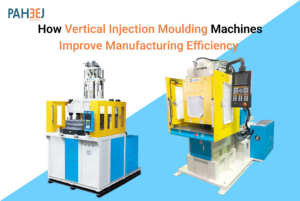
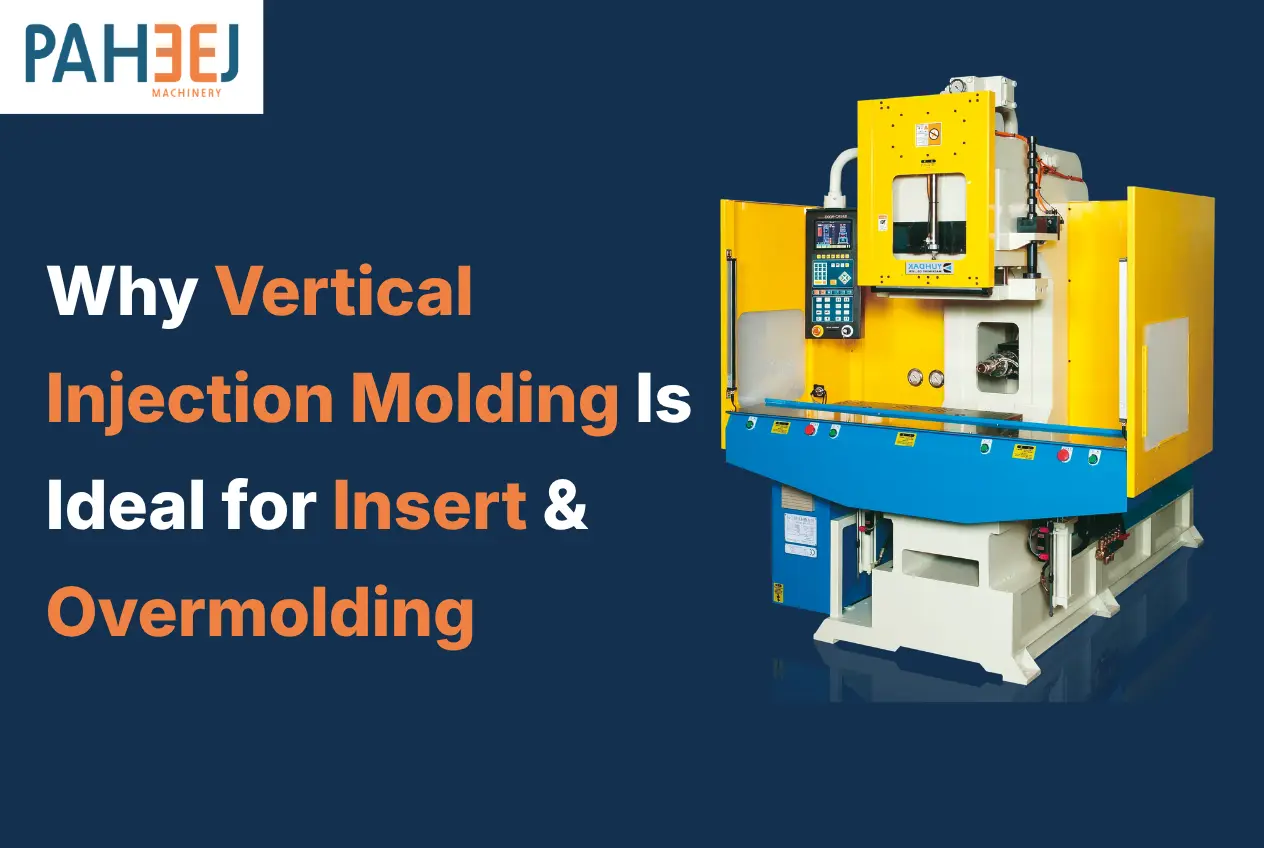
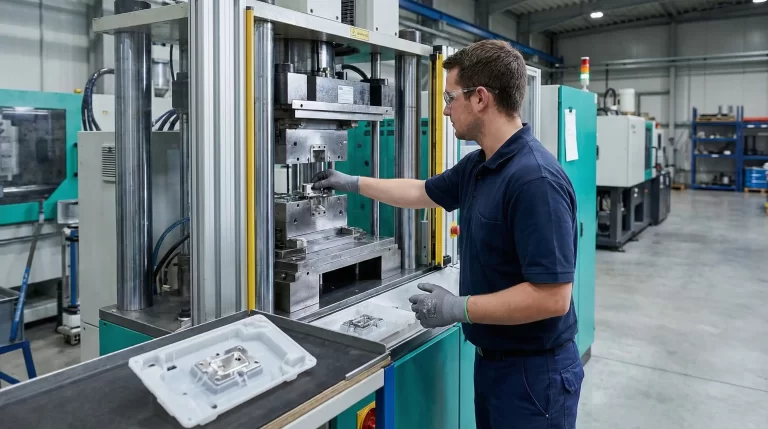
A vertical injection molding machine operates with a vertical clamping system where the mold opens and closes along a vertical axis. The injection unit moves vertically to deliver molten material into the mold cavity, creating gravity-assisted insert positioning, a fundamental advantage for applications requiring component placement before injection.
Key operational benefits:
- Natural insert retention – Gravity holds inserts in the lower mold half throughout the injection cycle
- Eliminated lateral forces – Vertical design prevents the displacement issues common in horizontal machines
- Consistent positioning – Gravitational force provides predictable, repeatable insert placement
What Is Insert Molding and Overmolding?
What is Insert Molding:
Insert molding embeds pre-formed components directly into plastic parts during the injection molding process. The molten plastic flows around the insert, encapsulating it and creating a permanent mechanical bond.
Common insert types:
- Threaded fasteners – Brass inserts, steel nuts, or mounting studs
- Electrical contacts – Pins, terminals, or conductive elements
- Structural reinforcements – Metal brackets, support plates, or framework
What is Overmolding:
Overmolding creates multi-material parts by molding one material over a previously molded substrate, typically combining a rigid plastic base with a soft elastomeric layer.
Common overmolding applications:
- Soft-touch grips – Tool handles, appliance controls, medical device grips
- Protective seals – Gaskets, environmental barriers, cushioning layers
- Ergonomic surfaces – Textured grips, comfort zones, non-slip features
Why These Processes Are Challenging
Common manufacturing challenges:
- Insert shifting – Lateral forces during injection displace components from their intended positions
- Alignment issues – Substrate and overmold material misalignment create defects
- Multi-step complexity – Traditional approaches require separate handling, increasing cycle time
- Quality risks – Additional process steps introduce more opportunities for defects
Why the Vertical Injection Molding Machine Is Perfect for Insert Molding
Gravity-Assisted Insert Stability
The vertical orientation uses gravitational force as a natural retention mechanism. Inserts placed in the lower mold half remain stable throughout mold closing and injection.
Stability advantages:
- Passive retention – No complex fixtures or holding mechanisms required
- Continuous force – Gravity works throughout the entire injection cycle
- Reduced displacement – Dramatically fewer positioning errors compared to horizontal configurations
- Consistent results – Predictable performance across all production runs
Improved Precision and Accuracy
Vertical machines achieve tighter tolerances for insert placement because gravity provides a consistent, predictable positioning force.
Precision benefits:
- Exact insert location – Elimination of lateral movement during injection
- Optimal encapsulation – Precise positioning ensures complete material flow around inserts
- Superior bond strength – Consistent metal-to-plastic interface quality
- Dimensional accuracy – Tighter tolerances on finished part specifications
Automation-Friendly Setup
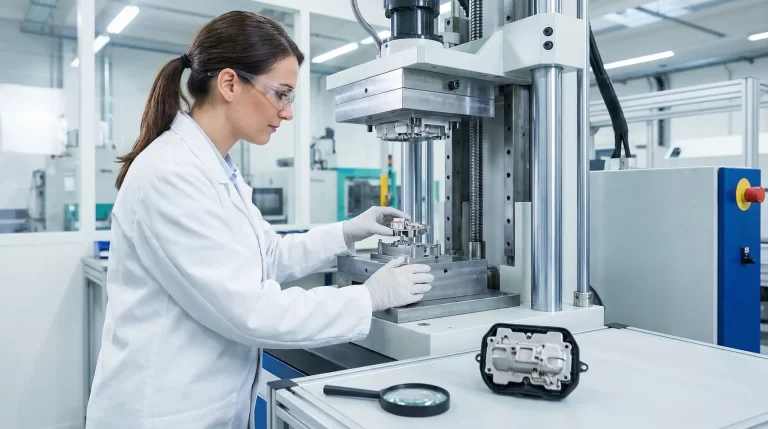
The top-down component of vertical insert molding machines simplifies robotic integration.
Automation advantages:
- Straightforward robot paths – Simple vertical motion for insert placement and part removal
- Vision system integration – Easy verification of insert positioning from above
- Reduced programming – Less complex motion sequences compared to horizontal layouts
- Improved reliability – Simplified automation reduces potential failure points
Reduced Scrap Rates
Better insert stability and positioning accuracy directly translate to lower rejection rates.
Quality improvements:
- Eliminated displacement defects – Inserts remain properly positioned throughout every cycle
- Reduced misalignment – Consistent gravity-assisted positioning prevents errors
- Lower material waste – Fewer rejected parts mean less scrap material
- Improved OEE – Higher overall equipment effectiveness through consistent quality
Why Vertical Injection Molding Excels in Overmolding Applications
Better Material Bonding
During overmolding, the substrate component must remain absolutely stationary while the second material is injected. Vertical machines excel here because gravity holds the substrate firmly against the mold surface.
Bonding advantages:
- Stable substrate foundation – Gravity prevents movement during second shot injection
- Optimal material contact – Consistent pressure ensures complete interface coverage
- Superior chemical bonding – Perfect positioning promotes molecular adhesion
- Enhanced mechanical interlock – Precise alignment improves physical bond strength
Multi-Material Alignment
Perfect alignment between substrate and overmold material is critical for both function and appearance.
Alignment benefits:
- Zero substrate movement – Gravity-assisted retention prevents shifting during the second shot
- Precise material flow – Overmold material deposits exactly where intended
- Visual quality – No misalignment defects visible on finished parts
- Consistent wall thickness – Uniform overmold layer across entire surface
Faster Production Cycles
Vertical machines integrate both molding shots in a single setup, eliminating the handling and repositioning required when operations occur on separate machines.
Cycle time improvements:
- Single-setup processing – Both shots completed in one machine
- Eliminated transfer time – No movement between separate molding stations
- Reduced work-in-process – Less inventory sitting between operations
- Simplified scheduling – Consolidated process is easier to plan and manage
Key Benefits of Vertical Molding Machine for Insert & Overmolding
- Space-saving design: enables installation in facilities where floor space limitations would prevent horizontal machine placement, producing the same output in a fraction of the footprint.
- Energy efficiency: through modern servo-driven systems, it reduces power consumption compared to hydraulic horizontal machines, lowering operating costs and supporting sustainability initiatives.
- High repeatability: from precision control systems and gravity-assisted positioning ensures consistent part quality across production runs, critical for applications with tight tolerance requirements.
- Lower maintenance: requirements result from simpler mechanical designs with fewer hydraulic components prone to leaks and wear, reducing downtime and service costs.
When Should You Choose Vertical Injection Molding?
Select vertical injection moulding for applications when your project involves:
Multi-material products:
- Two-shot overmolding requires substrate stability during sequential injections
- Soft-touch grips bonded to rigid plastic bases
- Multi-color components with precise material boundaries
- Complex assemblies combining structural and aesthetic materials
Insert-heavy designs:
- Multiple metal components positioned within plastic housings
- Electrical connectors requiring precise terminal placement
- Threaded inserts for mechanical assembly
- Structural reinforcements embedded in plastic parts
Space constraints:
- Manufacturing facilities with limited floor area
- Production lines requiring maximum density per square meter
- Existing facilities where horizontal machines cannot fit
- Multi-machine installations in confined spaces
Precision requirements:
- Tight tolerances demanding high repeatability
- Applications where insert positioning affects functionality
- Visual components requiring perfect material alignment
- Medical or aerospace parts with strict quality standards
Conclusion
Vertical injection molding machines overcome challenges like insert displacement, misalignment, and complex multi-step processes. With gravity-assisted positioning, they ensure better accuracy, consistent quality, reduced scrap, and faster production, making them ideal for insert molding and overmolding across industries.
Paheej Machinery offers an advanced, automation-ready vertical molding machine that delivers precision, efficiency, and cost savings for modern manufacturing.
Contact Paheej Machinery today to optimize your insert and overmolding production with high-performance vertical injection molding solutions.
Frequently Asked Questions (FAQs)
1. What is vertical injection molding used for?
Vertical injection molding is primarily used for insert molding and overmolding applications. It allows metal inserts, connectors, and electronic components to be securely encapsulated in plastic, making it ideal for automotive, medical, electrical, and industrial parts.
2. How does vertical injection molding differ from horizontal injection molding?
Vertical injection molding uses gravity to position inserts accurately, reducing movement during molding. Compared to horizontal machines, it offers better precision for insert molding, faster loading of components, and improved production efficiency for complex assemblies.
3. What are the benefits of vertical injection molding for insert molding?
Key benefits include higher insert placement accuracy, stronger part bonding, reduced assembly steps, lower manufacturing costs, and improved product durability. It is especially effective for parts requiring metal-to-plastic integration.
4. Is vertical injection molding cost-effective for manufacturers?
Yes. Vertical injection molding can reduce labor costs, minimize secondary assembly operations, decrease material waste, and improve production consistency, resulting in long-term cost savings for high-volume manufacturing.
5. What industries commonly use vertical injection molding?
Industries such as automotive, medical devices, electronics, telecommunications, and consumer products widely use vertical injection molding for producing precision components with embedded inserts and overmolded features.