Vertical Injection Moulding Machine Installation: What Manufacturers Should Know Before Commissioning
Installing a vertical injection moulding machine is a major step for any production line. The machine may be well specified, but its performance also depends heavily on on-site conditions, installation quality, and pre-production preparation. Taking the time to review all these aspects can go a long way toward preventing delays, protecting the equipment, and making commissioning far easier.
Whether you’re bringing on your first machine or expanding an existing line, involve your production, maintenance, and safety teams as early as possible. A good vertical injection moulding machine supplier can also help confirm site requirements and coordinate the installation. The machine manufacturer’s instructions are your primary reference, as requirements vary by model, capacity, and application.
1. Confirm the machine and process requirements
Start by confirming that the machine you’ve selected is right for the parts you intend to make. Check the mould dimensions, clamping force, injection capacity, opening stroke and any inserts or automation you’ll need for the process. You’ll also need to consider the materials you’ll be running and the expected cycle time.
These checks matter because vertical plastic injection moulding machines are often used for insert moulding, overmoulding, and processes where an operator or automation places an insert into the mould. The part, insert, and mould design must all be within the machine’s operating range. If requirements have changed since the order was placed, discuss them with the manufacturer or supplier before installation.
Ask your vertical injection moulding machine supplier for the latest installation documents, utility specs and recommended clearances. Check the delivered machine configuration against the order (including safety guarding, control options and peripheral connections). For a Huarong machine, use the documentation specific to that model rather than assume it matches another machine.
2. Prepare the installation site
The floor must support the machine’s weight and operating conditions. Check the foundation or slab requirements in the equipment documentation and, where appropriate, consult with a qualified building or structural professional. The floor must be level to within the manufacturer’s specified tolerance. A stable base is essential to ensure the machine sits correctly and operates consistently.
Allow sufficient space for installation, mould changes, routine servicing, and safe movement around the equipment. Plan the route from the unloading area to the final position (doorways, lifts, corridors, and floor loading will all affect delivery). Ensure there is adequate space to bring in the lifting plant and to safely remove the packaging.
Before delivery, clear the installation area and identify where auxiliary equipment will sit. Vertical plastic injection moulding machines may need nearby space for material handling, temperature-control equipment, dryers, conveyors or insert-feeding systems. Keep access to electrical isolators, emergency exits and maintenance points unobstructed.
A vertical injection machine supplier may be able to provide you with layout drawings or advice on clearances. Provide accurate site dimensions as early as possible to address access or space issues before the machine arrives.
3. Check utilities before delivery
A machine won’t be commissioned properly if the required services aren’t available or are incorrectly sized. Check the machine documentation to confirm the required electrical supply (voltage, phase, frequency, etc.) and connection requirements. A qualified electrician must make the connection and ensure the protective devices and isolation comply with relevant local requirements.
Check the requirements for cooling water, compressed air and any other services used by the machine or its auxiliaries. Confirm flow, pressure, temperature and connection details where specified. Cooling capacity is especially important: inadequate cooling can affect cycle times and process stability. If you notice issues with cooling or air supply, check for blocked filters, insufficient flow, or leaks in hoses and connections. Confirm that valves are fully open and pressure gauges read within recommended ranges. Sometimes, simply cleaning filters or tightening fittings can resolve common problems. If problems persist, consult the machine documentation or your utility supplier.
Plan cable and hose routes to reduce trip hazards and avoid interference with moving equipment or maintenance access. Label connections clearly, and make sure service points can be reached without crossing operator walkways.
Ask your vertical injection moulding machine supplier to confirm the utility checklist for the particular machine configuration.
4. Arrange lifting and positioning safely
Moving a machine is a planned exercise, not an ad hoc job. Check the machine’s shipping weight, lifting points and centre of gravity from the manufacturer’s instructions. Use lifting equipment with the appropriate capacity, and have competent personnel supervise the lift. Don’t lift from any part of the frame that is not a designated lifting point.
Inspect the consignment for visible damage before removing the protective materials. Note any issues and contact the supplier immediately. Once the machine is in position, check its alignment and level it according to the manufacturer’s procedure. Don’t adjust or bolt the machine in any way not specifically detailed in the installation instructions.
An experienced vertical injection moulding machine supplier can help coordinate positioning and installation support. If you’re the ones installing a Huarong injection moulding machine, make sure everyone involved has the correct model-specific instructions and understands the lifting and levelling requirements.
5. Prepare the mould and process equipment
Commissioning is much more efficient if the mould and the associated equipment are ready in advance. Check the mould to ensure it’s compatible with the machine platen, clamping arrangement, daylight, and opening stroke. Inspect it for any damage, and confirm the lifting points are suitable. All the necessary fasteners and connections should be in place.
For insert moulding, confirm how the inserts will be loaded and held. The operator should be able to position the inserts consistently without entering any hazardous areas. If you’re planning to use a robot or an automatic insert-loading system, confirm the interface, guarding, and sequence with the machine and automation teams before commissioning.
Ensure that the material handling equipment is all ready for the resin you’re going to use. This could include drying, conveying, and temperature control, depending on the material and process. Materials must be properly identified and stored in accordance with the material supplier’s recommendations.
Because vertical injection moulding machines often use insert-based processes, a small prep gap can cause significant delays. A mould trial, an insert check, or a dry run of the automation can highlight the problem before the first production shift.
6. Review safety and operator readiness
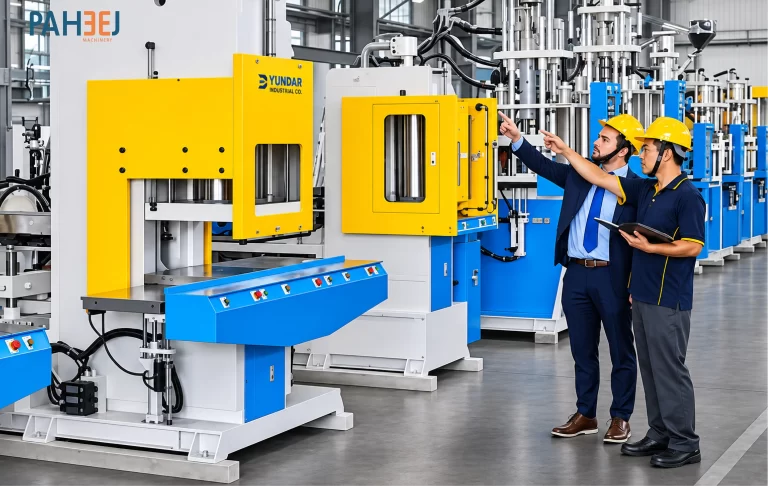
Before operating, check the machine’s safety devices, guards and emergency stops. Ensure that all the protective features are in place and working as specified. Establish clear procedures for mould changes, cleaning, maintenance, and handling hot material. Only properly trained and authorised personnel should operate or service the machine.
Operators need to be familiar with the control panel, start-up and shutdown procedures, alarms, and what to do in the event of an interruption. Maintenance staff need to know how to isolate energy sources before working on the machine. The operating and service manuals need to be readily available to those who need them.
Training should be specific to the model in question and the production task. Check with the vertical injection moulding machine supplier what training is available for operators and maintenance staff, and book it before routine production begins. Commission and run the Huarong injection moulding machine in accordance with the instructions supplied with the machine and your site’s safety procedures.
7. Use commissioning to establish a reliable baseline
Commissioning should follow a well-defined sequence agreed with the supplier and the site team. It typically involves checking the installation and utilities, powering up the machine, checking the controls and safety systems and then running a process trial with the actual mould and material. The precise steps will of course vary depending on the machine and application.
Record all the key settings, alarms, inspection results and any adjustments made during the trial. Check the first parts against the agreed quality requirements (dimensions, visible defects, etc.). If the results are not as required, go back and review the process conditions and supporting services with qualified people, rather than fiddling with multiple settings at once.
Ask the vertical injection moulding machine supplier for a full handover, including handover documentation, recommended maintenance tasks, and any open items. Keep that information as part of the machine records. For a Huarong injection moulding machine, clear commissioning notes will help future operators and technicians understand how the machine has been set up.
8. Plan for the first production period
The first few days of production are an opportunity to confirm that the machine, mould, material, and work instructions work together as they should. Monitor cycle consistency, part quality, alarms, and utility performance. Encourage operators to report any unusual noises, leaks, temperature changes, or repeated interruptions as they occur.
Schedule routine checks from the outset (cleaning, lubrication, and any inspection tasks the manufacturer may specify). Keep a record of any downtime and process changes so you can trace recurring problems back to their root cause. Have your spares and service contacts on hand, in line with your production requirements.
A good vertical injection moulding machine supplier can be a real asset after installation, especially when the team is learning a new process. The value of vertical injection moulding machines lies in how well they fit into the overall production system, not just in the initial installation.
A smoother path to commissioning
Successful installation starts before the machine even gets to the factory. You need to confirm the application, prepare the site and utilities, co-ordinate safe delivery, ready the mould and train the team. Then use commissioning to verify the installation is correct and establish a stable production baseline.
Work closely with your vertical injection moulding machine supplier and follow the specific machine’s instructions. With careful preparation, you can introduce a Huarong injection moulding machine into production with fewer avoidable delays and a clearer path from installation to dependable operation.
Frequently Asked Questions (FAQs)
How can manufacturers avoid delays during Vertical Injection Moulding machine installation?
Confirm your machine specifications, prepare a level floor, and verify electrical, cooling, and air utilities before delivery. Having the mould, inserts, and auxiliary equipment ready in advance also prevents last-minute commissioning delays.
What is the safest way to lift and position vertical rubber injection moulding machines?
Check the machine’s shipping weight, centre of gravity, and designated lifting points in the manufacturer’s manual. Use properly rated lifting equipment under competent supervision, and never lift from non-designated parts of the frame.
How do you troubleshoot cooling or air supply issues during commissioning?
Check for blocked filters, insufficient flow, hose leaks, or partially closed valves, and verify that pressure gauges read within recommended ranges. Simply cleaning filters or tightening fittings often resolves these common issues.