

How Vision Systems Help Reduce Scrap in Injection Moulding
Scrap in injection moulding often begins with minor issues, such as a part sticking in the mould, a shifted insert, or an incomplete cavity. If these go unnoticed, the process can produce multiple defective parts. Vision systems address this by monitoring parts and moulds during production, providing operators with early warnings and opportunities to respond.
A vision mould protection system inspects the mould before closure, while a separate or integrated vision system can inspect finished parts. Using both together helps reduce avoidable scrap, prevent tooling damage, and gives the production team clearer insight into recurring defects.
What does a vision system check?
An industrial camera captures images at key points in the moulding cycle. Software compares these images to predefined part and process criteria. Depending on the setup, the system may check whether:
- The component has been ejected and removed.
- A previous part or foreign matter remains in the mould.
- Inserts are present and correctly positioned.
- Each cavity has produced a part.
- A visible defect (e.g. short shot, flash, contamination) is present.
Some systems focus on mould protection before closure, while others inspect finished parts at the machine or downstream. Inspection criteria vary by part, camera view, lighting, and production setup.
How a vision mould protection system helps prevent scrap
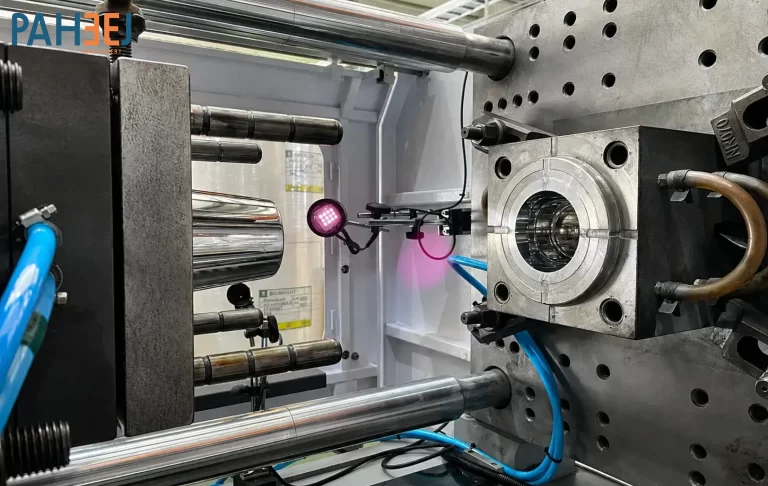
Before mould closure, a vision mould protection system can detect unremoved parts, residual material, or misaligned inserts. If inspection fails, it can trigger an alarm or halt the next mould close, depending on system integration.
This check is critical because closing a mould with an obstruction or incorrect part can damage the tool and result in multiple defective parts. Halting the next cycle allows for prompt correction and reduces the risk of tool repair.
A mould inspection vision camera provides visual checks inside the moulding cell. The camera must cover the relevant area, and inspections should be timed to the cycle, such as after ejection and before closure. Camera position, lighting, and selected inspection zones all affect system reliability.
Catching defects closer to the source
A vision system can inspect parts as they exit the machine, identifying visible defects such as incomplete fill, missing features, flash, discolouration, and contamination. Early detection allows for isolation of affected parts and investigation before further rejects occur.
The camera does not identify the cause of defects, but inspection results can reveal patterns. For example, recurring defects may follow material changes, tool cleaning, or machine adjustments. Some systems store images or results to support root cause analysis. Data availability depends on the system.
Why inspect both the mould and the part?
Mould protection and finished part inspection address different risks. A vision-based mould protection system monitors conditions that could cause collisions, failed ejections, or issues in the next cycle. Finished part inspection ensures the part meets visual specifications.
A mould inspection vision camera can help prevent certain cycle-related problems through in-mould checks. Post-ejection inspection detects visible part defects. Some production lines benefit from a combined approach, while others may require a downstream inspection station.
Each check should be positioned to provide useful information without disrupting the cycle. Test the system with both acceptable and defective samples under actual production lighting and conditions before allowing teams to make decisions based on its results.
Getting useful results from a vision system
A camera’s effectiveness depends on the quality of its inspection. Before installation, define the defects or mould conditions of interest and determine the desired system response to detected issues. This is essential for a practical setup.
- Select clear inspection points and decide whether the system will inspect the mould, the ejected part, or both.
- Test real samples, including both acceptable parts and known defects, to fine-tune inspection settings.
- Verify lighting and camera coverage. Glare, shadows, transparent materials, and hidden surfaces can hinder inspection of certain features.
- Define the response to a failed check, such as triggering an alarm, stopping the machine, or rejecting a part, based on risk and equipment.
- Review results with operators. Ensure false rejects and missed defects are tracked, and update inspection rules through a controlled process.
Vision inspection has limitations. Cameras cannot verify features they cannot see, and visual inspection alone may not detect internal voids, material properties, or dimensions that require measurement. Inspection plans must align with product quality requirements.
A practical way to reduce avoidable scrap
Vision systems reduce scrap by checking for specific issues at key points in the moulding cycle. They can serve as mould protection systems to detect stray parts or misplaced inserts before mould closure. Mould inspection vision cameras support visual checks inside the cell, while part inspection detects visible defects close to production.
Optimal results occur when vision checks are tied to clear quality criteria and the production team responds promptly. Early detection and easier defect review help reduce avoidable waste and maintain consistent production.
Frequently Asked Questions (FAQs)
Can a vision system detect every injection moulding defect?
No. It can detect defects that are visible to the camera and are covered by the inspection setup. Hidden internal defects or properties which would require dimensional or material testing would need to be assessed by other means.
Does a mould protection camera adjust machine settings?
Not necessarily. Many systems provide a result or trigger an alarm, stop, or reject. The operator or process engineer then investigates the cause and decides whether to adjust the machine.
Is a vision mould protection system the same as part inspection?
They can be connected, depending on what is being checked. Mould protection looks for retained parts or misplaced inserts before mould closure. Part inspection evaluates the part itself against visual quality criteria.
Interested in a vision camera to protect your mould and reduce scrap? Contact our representative today.