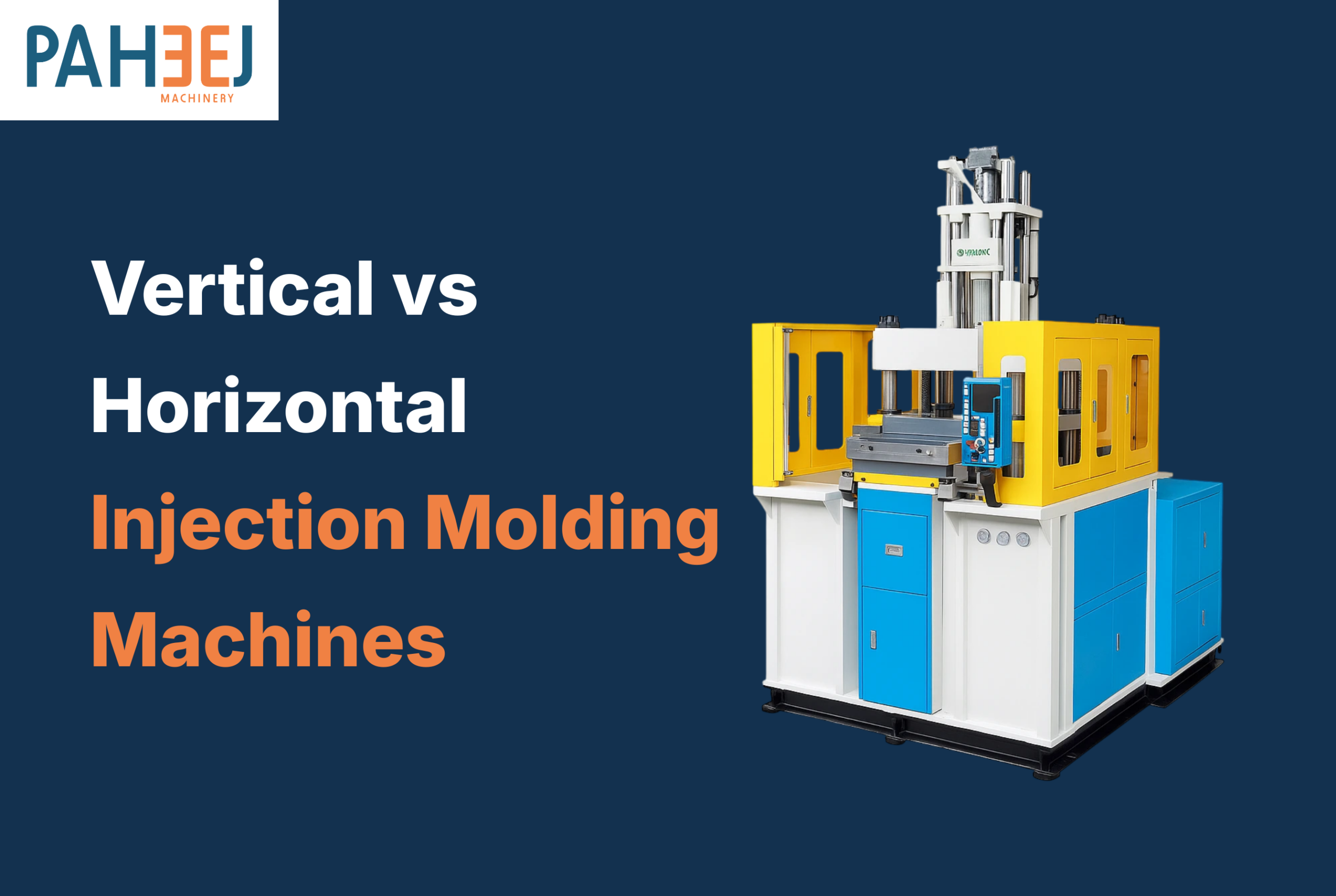
Vertical vs Horizontal Injection Molding Machines: Which One to Choose?
Injection molding remains a core manufacturing process across industries, producing components ranging from precision medical devices to high-volume consumer goods. Manufacturers face a fundamental equipment decision when establishing or expanding molding operations: selecting between vertical and horizontal machine configurations.
Machine orientation significantly impacts production efficiency, part quality, automation capabilities, and operational costs. Understanding the differences between vertical and horizontal injection molding machines enables informed equipment selection aligned with specific manufacturing requirements and business objectives.
Key Differences Between Vertical and Horizontal Injection Molding Machines
Mold Access and Operator Visibility
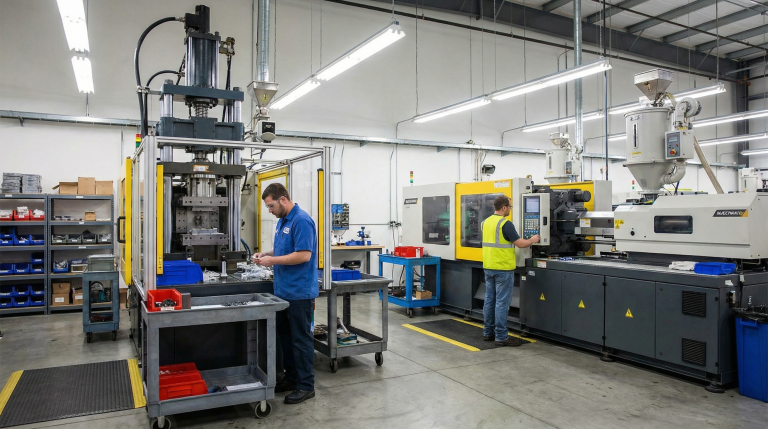
Vertical Injection Molding Machines provide open mold areas with convenient access from above. Operators can easily view cavity conditions, place inserts accurately, and perform mold maintenance without extensive reach or positioning. This accessibility proves valuable during setup, changeovers, and quality inspections.
Horizontal machines offer side access to mold areas, typically suitable for larger tooling installations. While access requires more lateral clearance, this configuration accommodates substantial mold assemblies and established production workflows.
Insert and Multi-Material Molding
Vertical machines excel in insert molding applications where gravity naturally assists component positioning. Metal inserts, threaded elements, and substrate materials settle into precise locations without additional fixturing. Overmolding operations benefit from stable substrate retention during material injection.
Horizontal machines can accommodate insert molding but often require specialized fixtures or orientation mechanisms to maintain component position during mold closure and injection. These additional requirements add complexity to mold design and setup procedures.
Automation Compatibility
Vertical configurations naturally fit robotic pick-and-place automation, particularly for high-mix production or complex part handling. Robots access the mold area from above, removing parts and loading inserts efficiently. The open design supports multiple automation approaches including rotary tables and multi-station configurations.
Horizontal machines integrate extensively with conveyor systems and robotic arms in established production lines. Linear automation approaches move parts through downstream operations efficiently. This configuration supports high-volume operations where parts flow continuously through processing stages.
Floor Space and Factory Layout
Vertical machines feature reduced footprints ideal for compact manufacturing environments. The upright configuration requires minimal lateral space, enabling higher equipment density within production areas. This space efficiency proves valuable in facilities where floor space costs significantly impact operational economics.
Horizontal machines require more lateral clearance but offer flexibility for conveyor integration and linear material flow. The configuration suits facilities designed around traditional production line layouts where horizontal material movement predominates.
Advantages of Vertical Injection Molding Machines
Vertical injection molding machines deliver specific advantages that make them preferred choices for certain applications:
- Superior performance in insert molding, overmolding, and complex multi-material parts
- Easier mold setup and maintenance through open access design
- Enhanced automation capabilities supporting diverse part handling approaches
- Efficient mold changeovers due to accessible mold mounting areas
- Space-efficient footprint ideal for small workshops and high-density production floors
- Gravity-assisted insert positioning reducing fixturing requirements
These benefits of vertical injection molding machines support applications requiring precision, flexibility, and efficient use of manufacturing space.
Advantages of Horizontal Injection Molding Machines
Horizontal injection molding machines provide distinct benefits for specific production requirements:
- Optimal performance in high-speed, high-volume production of standard parts
- Established integration with most molding facilities and production workflows
- Smooth connectivity with downstream conveyors and linear automation systems
- Generally simpler handling for larger mold installations
- Proven reliability in continuous production operations
- Wide availability of tooling, automation, and support infrastructure
These advantages make horizontal machines standard choices for high-throughput operations with established production processes.
Application Scenarios and When to Choose Which
When to Choose Vertical Machines
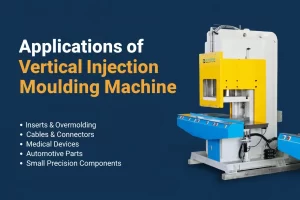
Key applications of vertical injection moulding machines include:
- Insert molding applications involving metal inserts or threaded components
- Multi-material or overmolding operations requiring precise material placement
- High-mix, low-volume production with frequent product changes
- Space-constrained manufacturing cells where floor area is limited
- Complex assembly components requiring precise material integration
- Applications benefiting from gravity-assisted component positioning
When to Choose Horizontal Machines
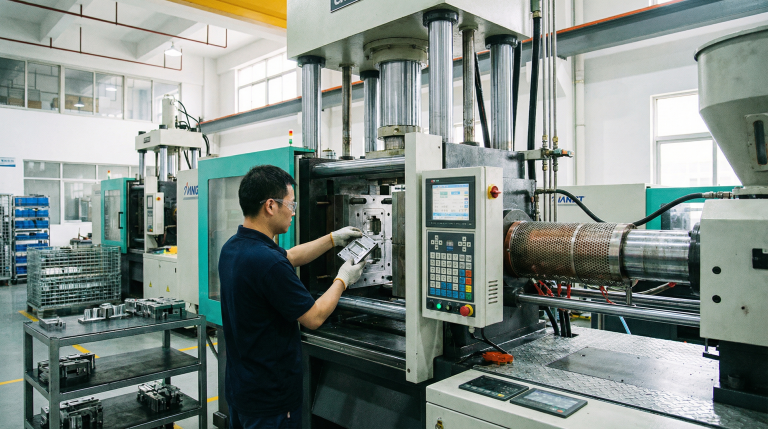
Horizontal injection molding machines suit different operational requirements:
- Large part production runs with minimal insert complexity
- Operations requiring integrated conveyor and automated stacking systems
- Automotive exterior components and high-volume packaging closures
- High-throughput repetitive molding operations with established workflows
- Applications where linear material flow optimizes production efficiency
- Facilities with existing horizontal automation infrastructure
Conclusion
The choice between vertical and horizontal injection molding machines depends on production requirements, part complexity, automation objectives, and facility constraints. Vertical machines deliver advantages for insert molding, multi-material applications, and space-limited facilities. Horizontal machines excel in high-volume production of standard parts and operations with established linear automation.
Neither configuration is universally superior. The optimal choice aligns machine capabilities with specific manufacturing needs, supporting both immediate production requirements and long-term operational objectives.
Paheej Machinery offers a range of vertical injection molding machines and expert guidance to help manufacturers select the right solution for their unique production requirements, ensuring quality, efficiency, and long-term value.