Vertical Injection Moulding for Precision Components: Important Considerations
The demand for precision plastic components is growing rapidly across industries like electronics, medical devices, automotive sensors, and connectors. Achieving tight tolerances and consistent dimensional accuracy requires more than standard moulding practices. It demands careful attention to machine selection, tooling design, material handling, and process control.
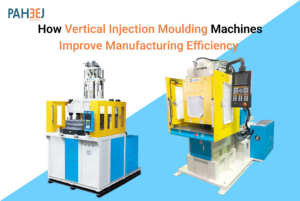
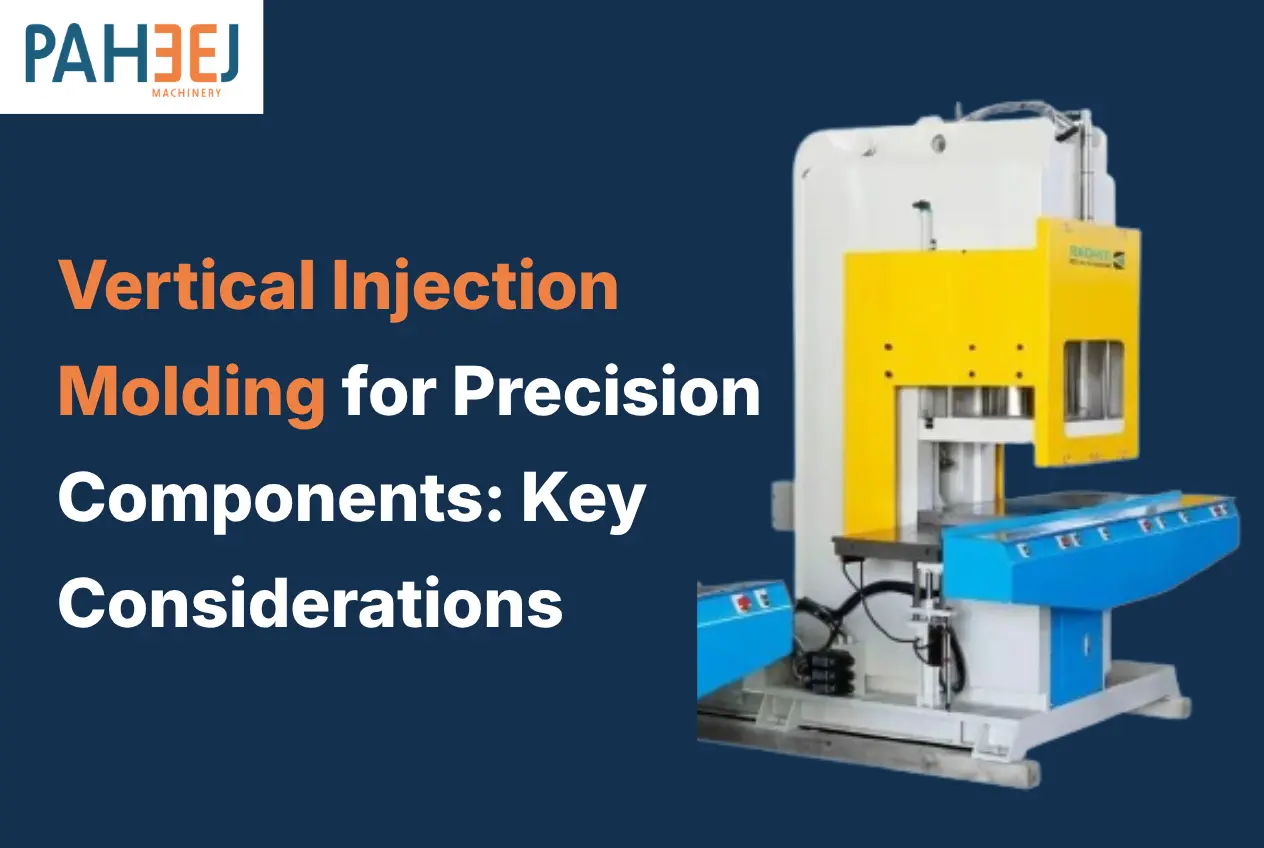
Vertical injection moulding machines are particularly well-suited for precision work, offering gravity-assisted material flow, stable insert positioning, and compact clamping designs that support accurate, repeatable production. In this blog, we explore the key considerations manufacturers must address when using vertical injection moulding for precision components.
Why Vertical Injection Moulding Suits Tight-Tolerance Production
Vertical machines offer several practical advantages when dimensional accuracy matters:
- Gravity-assisted material flow: The vertical orientation helps molten plastic fill the cavity evenly, which is especially useful for small or intricate parts.
- Stable insert positioning: Inserts sit on the lower fixed platen and stay in place during clamping and injection, supporting positional accuracy.
- Even clamping force: Vertical presses distribute force uniformly across the mould face, helping reduce flash and maintain part consistency.
- Rotary table capability: Multi-station rotary tables allow simultaneous loading, moulding, and unloading, maintaining precision while supporting efficient production flow.
These characteristics make vertical moulding a practical choice when stable component quality is the priority.
Machine Selection Considerations for Precision Components
Choosing the right machine is the foundation of any precision moulding operation.
Clamping Force and Stability
Appropriate clamping force ensures the mould remains fully closed during injection, preventing flash and maintaining dimensional control. For precision work, the clamping system must deliver consistent, evenly distributed force every cycle. Over-clamping risks damaging delicate tooling, while under-clamping allows flash and dimensional variation.
Injection Unit Accuracy
Shot-to-shot repeatability depends on how well the injection unit controls volume, pressure, and speed. Servo-driven systems offer better control over screw position and injection profiles, which directly supports dimensional consistency.
For small-part moulding, the unit should be sized appropriately. An oversized barrel increases residence time and can degrade the material.
Choosing the Right Machine Size
Precision work does not always require large machines. In fact, oversized machines often compromise control. The machine should be matched to the shot size, clamping requirement, and mould dimensions of the specific component.
Paheej Machinery offers vertical injection moulding machines across a range of tonnages and injection capacities, making it easier to match the machine to the application.
Tooling Design Factors That Influence Precision
Along with machine selection, tooling design plays a direct role in part consistency. Even with the right machine, precision outcomes depend heavily on tooling quality and design.
Mould Construction and Tolerances
Precision components need moulds built with close machining tolerances to ensure stable part dimensions. Steel selection, hardening, and surface finish all contribute to accuracy and long-term tool life.
Cavities, cores, and inserts must hold their dimensions through repeated thermal cycling without shifting or wearing prematurely.
Gate Design and Placement
The gate type, size, and position affect how material fills the cavity. Poor gate placement can lead to uneven packing, differential shrinkage, or sink marks.
For precision components, gate placement should promote balanced fill. Common choices include pin gates, submarine gates, and valve gates, depending on part shape and surface requirements.
Cavity Balancing in Multi-Cavity Moulds
Multi-cavity moulds for precision components must be carefully balanced so every cavity fills identically. Runner length, cross-section, and gate dimensions should be matched across all cavities.
Any imbalance results in part-to-part variation, which is not acceptable in tight-tolerance production.
Material Considerations for Precision Moulding
Material behaviour has a direct impact on part dimensions. A few key factors should be considered:
- Shrinkage predictability: Different resins shrink at different rates. Semi-crystalline materials like POM, PBT, and nylon offer good stability but shrink more than amorphous materials like PC or ABS. Precision moulding requires materials with consistent, predictable shrinkage behaviour.
- Moisture sensitivity: Materials like nylon and PBT absorb moisture, which affects melt viscosity and final part dimensions. Proper drying before processing is essential for precision work.
- Filler effects: Glass-filled or mineral-filled resins improve rigidity and reduce shrinkage but can introduce anisotropic shrinkage, complicating tolerance control.
- Lot-to-lot consistency: Variations between material lots can shift the process window. Precision moulding demands consistent raw material quality from batch to batch.
Process Control in Vertical Injection Moulding
Achieving precision is not just about hitting the right settings once, it is about repeating them identically across thousands of cycles.
Injection Speed and Pressure Profiles
Multi-stage injection profiles allow the moulder to adjust fill rate at different points during cavity filling. This reduces internal stress, burn marks, and variation between shots.
Holding pressure and time should be set to ensure full packing without over-packing, which can cause flash or dimensional distortion.
Temperature Management
Melt temperature must remain consistent to keep viscosity stable from cycle to cycle. Mould temperature also needs close regulation, ideally through dedicated temperature control units, to manage cooling rate and shrinkage uniformity.
Small temperature swings can push part dimensions outside of tolerance, especially on components with tight specifications.
Real-Time Monitoring
Real-time process monitoring, including cavity pressure sensing, screw position tracking, and cycle-time consistency metrics, helps maintain the tight process window that precision components demand.
Application Areas That Demand Precision Vertical Moulding
Several industries rely on precision vertical injection moulding for critical components:
- Electrical connectors and terminals, where pin spacing and wall thickness must be exact
- Medical components, where dimensional and cosmetic standards are tightly regulated
- Sensor housings, where geometry must support proper sealing and function
- Precision Insert-moulded assemblies, where metal and plastic must bond with exact positional accuracy
Paheej Machinery’s vertical injection moulding machines serve all of these applications, delivering the control and consistency that precision production requires.
Conclusion
Producing precision components on a vertical injection moulding machine is practical and effective when the right decisions are made at every stage. Machine selection, tooling design, material handling, and process control all contribute directly to the accuracy and consistency of the final part.
When these factors are addressed properly, vertical moulding delivers the kind of repeatable, stable output that demanding applications require.
Paheej Machinery supports manufacturers with vertical injection moulding solutions built for consistent, accurate production. Learn more about our machines or get in touch to discuss your requirements.
Frequently Asked Questions (FAQs)
1. What is vertical injection molding, and why is it ideal for precision components?
Vertical injection molding is a manufacturing process where the mold is positioned vertically, allowing gravity-assisted material flow and stable insert placement. It is ideal for precision components because it improves dimensional accuracy, reduces flash, and ensures consistent production for industries like electronics, automotive, and medical devices.
2. What factors affect precision in vertical injection molding?
Key factors include machine selection, clamping force, injection accuracy, mold design, material properties, and process control. Proper temperature management, cavity balancing, and real-time monitoring help maintain tight tolerances and consistent part quality.
3. How does vertical injection molding compare to horizontal injection molding?
Vertical injection molding offers better insert stability, gravity-assisted positioning, and a smaller footprint. Horizontal molding is often preferred for larger parts and high-volume production, while vertical machines excel in precision molding, insert molding, and overmolding applications.
4. Which materials are best for precision injection molding?
Materials such as POM, PBT, nylon, ABS, and polycarbonate are commonly used. The best choice depends on dimensional stability, shrinkage rate, moisture sensitivity, and application requirements. Consistent material quality is critical for achieving tight tolerances.
5. What are the benefits of using vertical injection molding machines?
Vertical injection molding machines provide higher precision, improved insert positioning, faster production cycles, better repeatability, reduced floor-space requirements, and enhanced automation capabilities. These benefits make them suitable for manufacturing complex, high-accuracy plastic components.