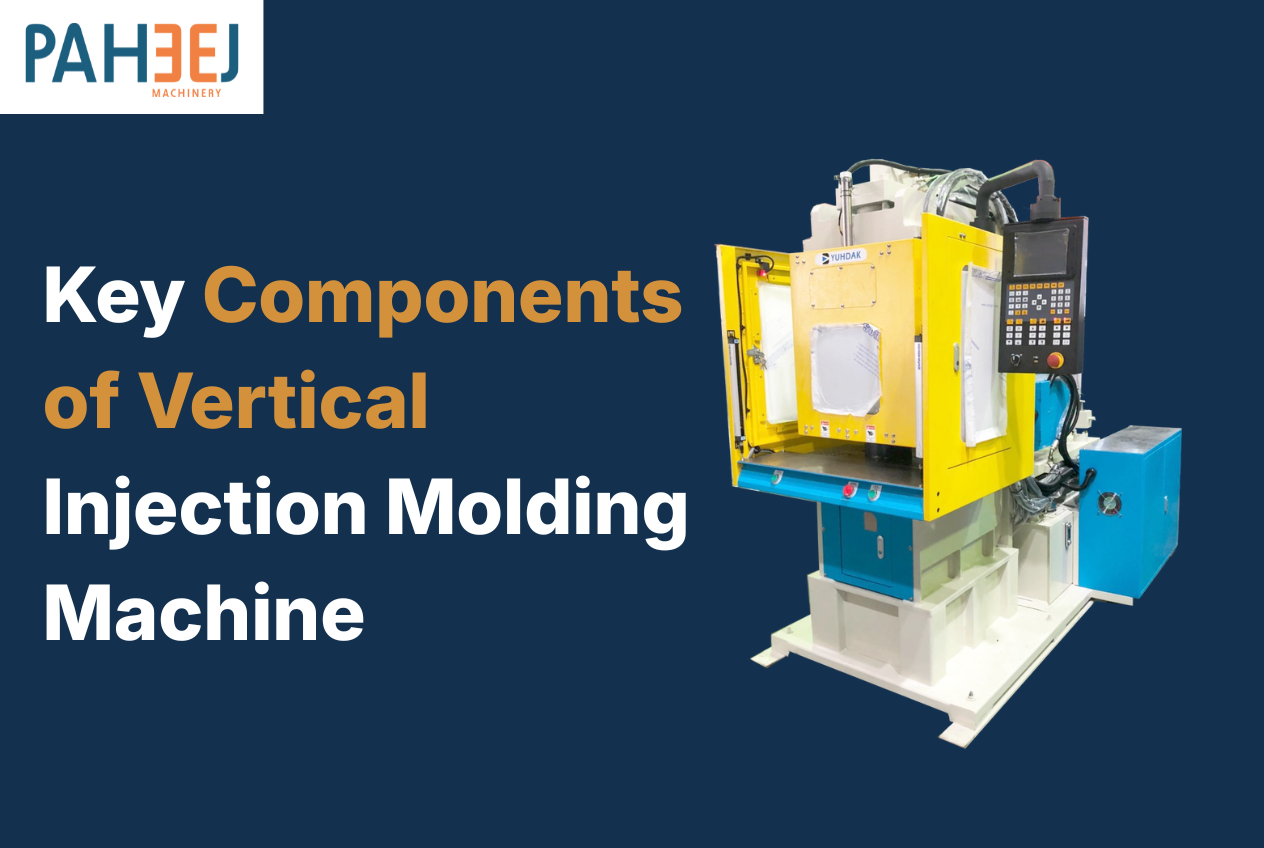
Key Components of Vertical Injection Moulding Machines for Precision Manufacturing
Vertical injection moulding machines play a crucial role in precision manufacturing across diverse industries. Their unique design advantages make them essential for applications requiring tight tolerances, efficient insert moulding, and space-optimised production layouts. Understanding the key components of vertical injection moulding machines helps manufacturers select equipment that delivers consistent performance and long-term reliability.
Component-level knowledge proves valuable when evaluating machine capabilities, planning maintenance strategies, and optimising production workflows. Each element contributes to overall performance, affecting part quality, cycle efficiency, and operational costs. Vertical injection moulding machines by Paheej Machinery are designed to support these requirements through stable operation and precise process control.
What Makes a Vertical Injection Moulding Machine Unique
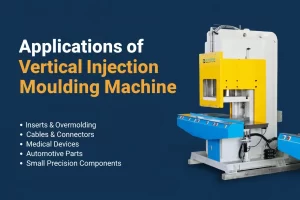
Vertical injection moulding machines differ from horizontal systems through their clamping orientation and overall configuration. The vertical arrangement creates a compact footprint while enabling superior insert positioning through gravity-assisted placement.
This design proves particularly valuable where component-level precision matters most:
- Electronics manufacturers benefit from accurate insert moulding for connectors
- Medical device production relies on consistent overmoulding for ergonomic components
- Automotive suppliers utilise vertical systems for precision interior parts
- Packaging operations leverage space efficiency for high-volume production
These characteristics highlight the benefits of Vertical Injection Moulding Machines, particularly in applications where accuracy, efficiency, and space optimisation are critical.
1. Clamping Unit
The clamping unit maintains mould stability and positional accuracy throughout the injection cycle. In vertical configurations, this system holds the mould securely while materials are injected, ensuring consistent part dimensions and proper material bonding.
Paheej Machinery’s machines offer hydraulic, servo-hydraulic, and all-electric clamping options, each providing high efficiency and precision, tailored to specific production needs.
2. Injection Unit
The injection unit delivers molten material into the mould cavity with the precision and repeatability essential for quality production. This system comprises the barrel, screw mechanism, and injection drive components that melt, meter, and inject plastic materials under controlled conditions.
Precise material control ensures accurate shot weights, consistent fill patterns, and proper material distribution in complex geometries. Modern injection units maintain tight process windows that support demanding applications requiring minimal variation across production runs.
3. Mould Mounting Area and Platen System
The platen system consists of fixed and movable platens that secure the mould and enable its opening and closing movements. In vertical machines, this configuration provides excellent accessibility for mould setup, insert placement, and routine maintenance operations.
Paheej Machinery’s systems support a wide range of mould sizes and configurations, from simple single-cavity moulds to complex multi-component designs, helping manufacturers optimise production.
4. Rotary Table or Sliding Table
Many vertical injection moulding machines incorporate rotary or sliding table systems that enable multi-station operations and enhanced productivity. These components support sequential processes such as insert placement, moulding, and part removal occurring simultaneously at different stations.
Rotary tables index between positions, allowing insert loading at one station while moulding proceeds at another. These systems prove particularly valuable in insert moulding and overmoulding applications of Vertical Injection Moulding Machine, where manual or automated insert placement occurs outside the mould area, increasing throughput while maintaining operator safety.
5. Ejection System
The ejection system removes finished parts from the mould cavity safely and consistently once cooling is complete. Common ejection methods include ejector pins that push parts from core surfaces and ejector plates that provide broader contact areas for delicate components.
Controlled ejection becomes especially critical for multi-material parts where different material properties require careful handling. Proper ejection design preserves dimensional accuracy, prevents surface damage, and ensures consistent part release across production runs.
6. Control System and User Interface
The control system serves as the operational core of the vertical injection moulding machine, managing process parameters and providing operators with real-time feedback. Modern control panels feature programmable settings that store process recipes, touchscreen interfaces for intuitive operation, and alarm systems that alert operators to process variations.
Advanced control platforms integrated into Paheej Machinery’s vertical injection moulding machines support precise process control, improve repeatability, and reduce reliance on operator intervention during production.
7. Hydraulic, Servo, or Electric Drive Systems
Vertical injection moulding machines utilise different drive technologies, each offering distinct performance characteristics:
Hydraulic Systems:
- Provide robust power for large clamping forces
- Support fast cycle times in high-volume production
- Proven reliability in demanding applications
Servo-Hydraulic Systems:
- Combine hydraulic power with servo motor efficiency
- Offer improved energy consumption over standard hydraulic
- Provide enhanced process control and repeatability
All-Electric Systems:
- Deliver precise motion control and positioning
- Reduce energy consumption significantly
- Operate cleanly with minimal maintenance requirements
The choice depends on application requirements, production volume, and operational priorities such as energy efficiency, precision needs, and maintenance capabilities.
8. Safety and Automation Integration Components
Modern vertical injection moulding machines incorporate comprehensive safety systems and automation compatibility. Safety features include physical guards preventing access during operation, interlock mechanisms that halt machine function when guards are open, and emergency stop systems for immediate shutdown.
9. Cooling and Temperature Control Systems
Temperature stability proves critical for consistent moulding quality and optimal cycle efficiency. The machine’s cooling and temperature control systems maintain proper thermal conditions throughout the barrel, nozzle, and mould areas.
These systems include heating elements, thermocouples providing real-time thermal monitoring, and cooling circuits that stabilise temperatures. Precise temperature control ensures material properties remain consistent, supports proper melt flow, and enables predictable cycle times.
10. Maintenance-Friendly Design Elements
Well-engineered vertical injection moulding machines incorporate features that simplify routine maintenance and extend service life. Access to key components reduces service time and minimises production interruptions.
Paheej Machinery offers vertical injection moulding machines with long-term reliability, enabling manufacturers to maintain consistent performance and reduce total operating costs.
Conclusion
Understanding the key components of vertical injection moulding machines enables informed equipment selection and effective machine utilisation. Component quality and system integration have a direct impact on production precision, efficiency, and reliability.
With a focus on precision engineering and stable machine performance, Paheej Machinery provides vertical injection moulding solutions that support consistent quality and dependable manufacturing across a wide range of applications.