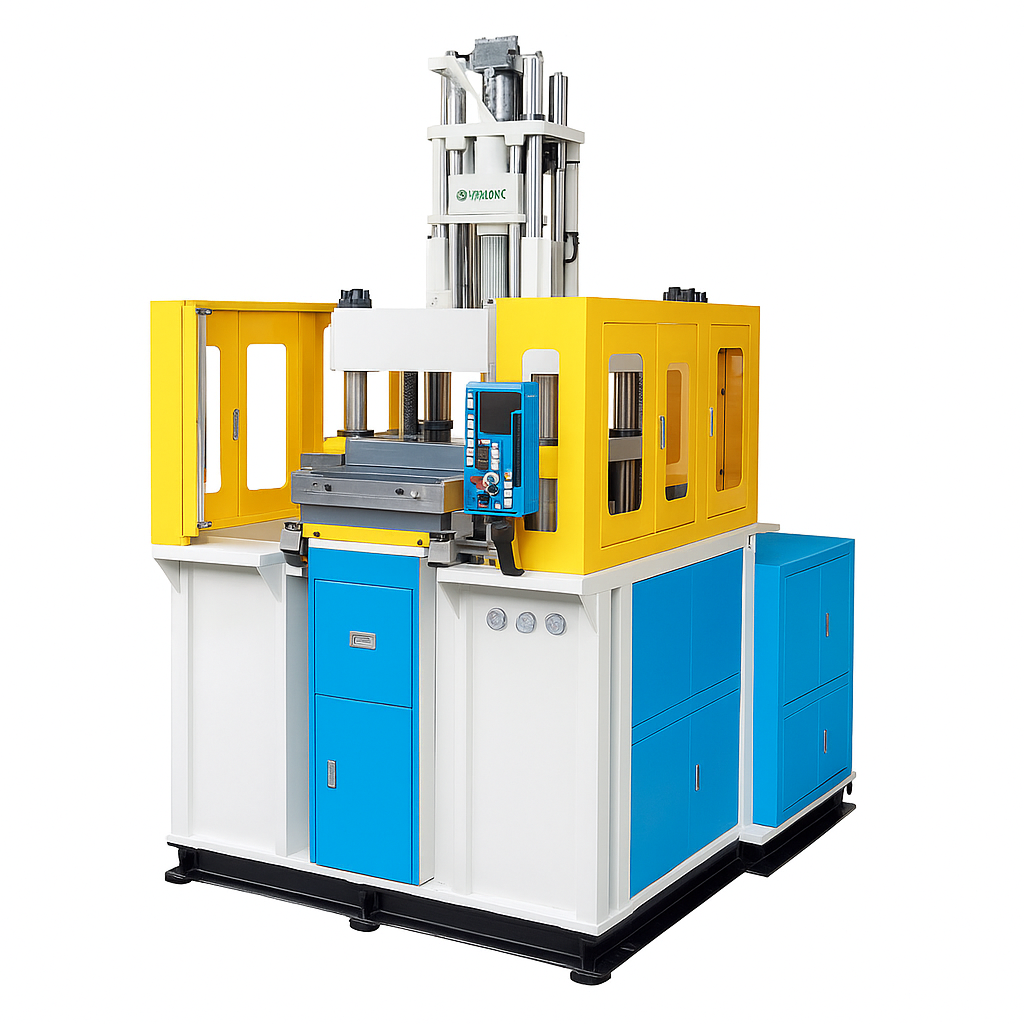
Important Things to Keep in Mind While Selecting Vertical Injection Molding Machinery
However, with numerous models, configurations, and features available, selecting the right vertical plastic injection molding machine can be challenging. This blog outlines the top 10 factors you need to consider to make a smart, future-proof investment.
Understand Your Application Requirements
Before diving into technical specifications, define your production goals:
- What type of parts are you manufacturing? (e.g. electrical connectors, automotive components, medical inserts)
- What are the dimensions, materials, and geometries of the parts?
- Is your focus on high-volume production or low-volume, high-precision work?
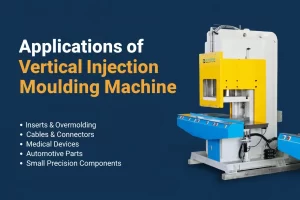
For instance, molding small metal inserts may require a rotary table machine with robotic arms, while simpler parts might be efficiently handled by a basic vertical press.
Select the Right Clamping Force
Clamping force prevents the mold from opening under injection pressure and is measured in tons. Vertical machines typically range from 15 to 300+ tons.
- Choose a machine with slightly higher clamping force than required by your mold design and material.
- Use a clamp force calculator based on part area and injection pressure to make an informed decision.
Choose the Right Machine Configuration
Vertical presses come in different setups based on your production needs:
- Rotary Table Machines – Offer simultaneous molding and loading/unloading, ideal for automation.
- Single Slide Machines – Feature a single station and are perfect for manual or low-volume production.
- Double Slide Machines – Enhance productivity by preparing the next cycle during molding.
Evaluate Injection Unit Specifications
The injection unit is responsible for melting and injecting plastic into the mold. Key parameters to evaluate:
- Shot Size – Should match the part weight.
- Injection Pressure and Speed – Crucial for complex and precision parts.
- Screw Diameter and L/D Ratio – Affects plasticizing performance and material consistency.
Consider Automation Compatibility
Automation dramatically boosts productivity and consistency, especially when working with inserts.
- Choose machines that support robotic arm integration.
- Look for designs with safety guards, interlocks, and tie-bar-free zones to enable easy and safe access.
Focus on Energy Efficiency & Servo Systems
Modern vertical injection machines are designed to be energy-efficient and environmentally friendly.
Look for:
- Servo hydraulic systems or all-electric drives
- Variable displacement pumps
- Energy-efficient motors
These technologies reduce operational costs while maintaining precision and stability.
Smart Control Systems & User-Friendly HMIs
Smart interfaces and control systems simplify machine operation and improve process monitoring.
- Opt for machines with touchscreen HMIs, real-time process feedback, and recipe storage.
- Ensure compatibility with Industry 4.0 standards for remote monitoring, SCADA, or MES integration.
Mold Compatibility
Make sure your machine can accommodate your mold setup:
- Verify tie-bar spacing, daylight opening, and platen dimensions.
- Choose machines with sliding tables or open clamping designs for easier mold changes.
- Tie-barless machines can be beneficial for larger or multi-cavity molds.
Brand Reputation & After-Sales Support
Purchasing a vertical injection molding machine is a long-term investment. Don’t overlook:
- Manufacturer’s track record and reputation
- Availability of local service centers and spare parts
- Training support, installation services, and warranty policies
Paheej Machinery partners with industry-leading brands like Sumitomo-Demag, Huarong, and Yuh-Dak, known globally for innovation, reliability, and high-performance molding equipment.
Evaluate ROI – Not Just Price
Sometimes, a slightly higher upfront cost delivers greater returns over time. Evaluate:
- Cycle times
- Scrap rates
- Downtime and maintenance needs
Perform a Total Cost of Ownership (TCO) analysis that includes energy usage, machine reliability, and service costs. A machine that costs more today might save thousands over the next five years.
Final Thoughts
Choosing the right vertical injection molding machine isn’t just about picking the most advanced or affordable option—it’s about finding the perfect fit for your product, your process, and your long-term manufacturing strategy.
By evaluating your needs across the 10 factors listed above, you’ll set yourself up for long-term success with higher efficiency, reduced waste, and better ROI.
If you’re exploring top-notch solutions in vertical injection molding, contact Paheej Machinery for expert guidance and a tailored machine selection.