How Vision Camera Improves Productivity and Reduces Machine Downtime in Injection Moulding
Injection molding operations in high-volume manufacturing environments face constant pressure to maintain production efficiency while minimizing unexpected interruptions. Common challenges including machine stoppages, mould damage, defects, and rework directly impact operational profitability and delivery performance.
Paheej Machinery’s Vision camera systems represent a modern solution that addresses these challenges through real-time monitoring and automatic intervention. These systems improve both productivity and operational reliability by detecting issues before they cause damage or quality problems.
The Link Between Productivity and Downtime in Injection Molding
Downtime directly affects manufacturing performance across multiple dimensions. Production output decreases when machines sit idle, cost per part increases as fixed expenses spread over fewer units, and delivery timelines suffer when schedules fall behind.
Common causes of unexpected downtime include part ejection failures where components stick in the mould, insert misalignment preventing proper mould closure, and foreign objects creating interference. Traditional monitoring approaches often identify these problems only after damage occurs or defects accumulate.
Real-time monitoring systems provide proactive detection, identifying potential issues before they interrupt production or damage expensive tooling. This preventive approach fundamentally changes how manufacturers maintain operational efficiency.
How Vision Cameras Improve Productivity
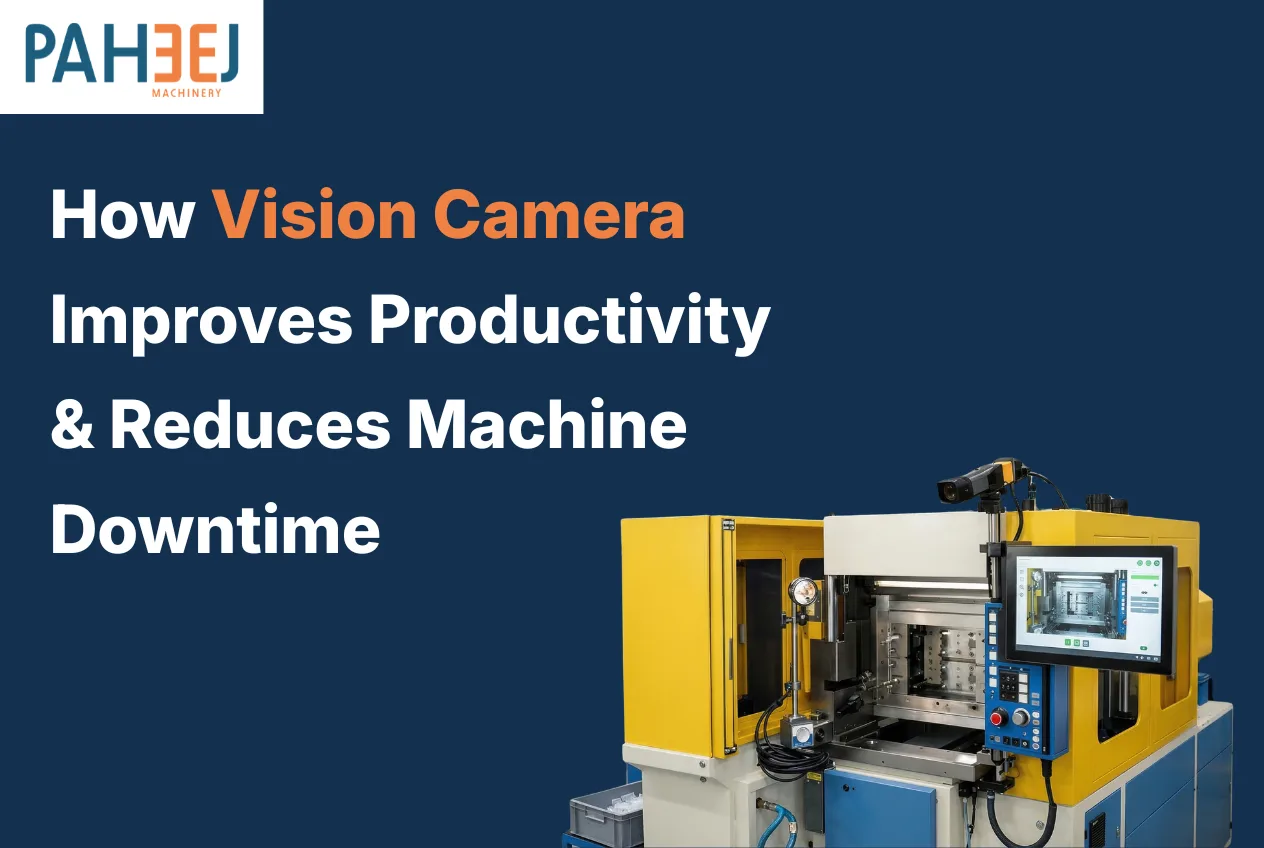
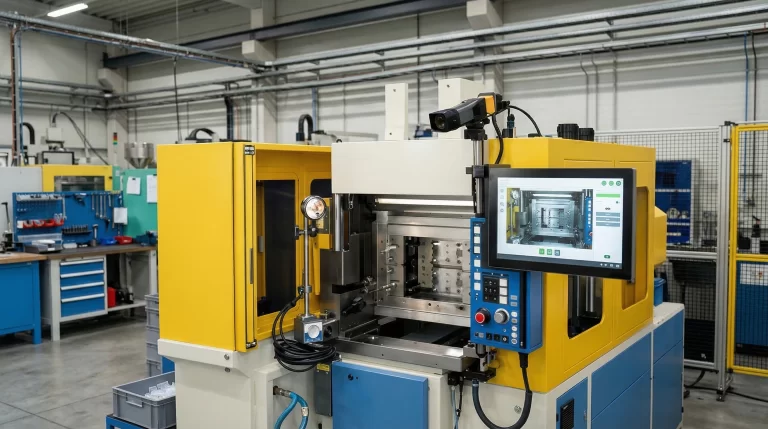
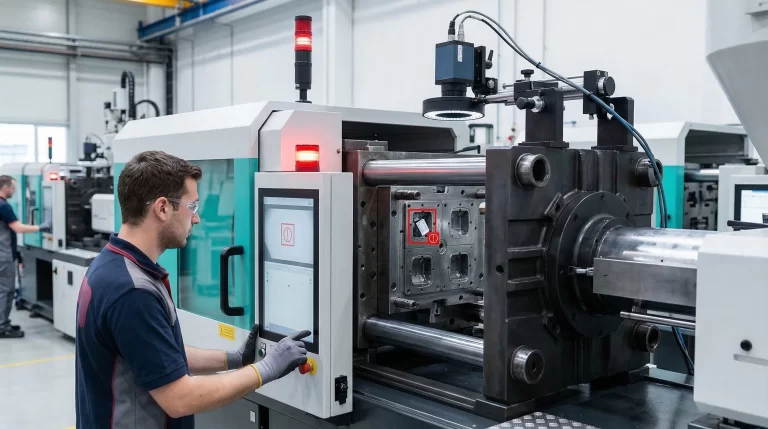
A mould protector vision camera system uses optical monitoring to inspect mould conditions throughout each production cycle. The camera captures high-resolution images during critical cycle phases, analyzing them automatically to detect abnormalities before mould closing occurs.
Faster and More Reliable Inspection
Vision cameras eliminate manual inspection delays by performing automated quality checks during every cycle. High-speed image capture and analysis occur within fractions of a second, ensuring continuous production flow without interruptions for human verification.
Automated inspection benefits include:
- Elimination of manual sampling delays
- Consistent verification across all production shifts
- High-speed processing matching rapid cycle times
- Continuous quality monitoring without production interruptions
This automated approach maintains consistent inspection standards across all shifts and operators, supporting optimal production speed while ensuring quality assurance.
Reduction in Scrap and Rework
Early defect detection prevents quality issues from propagating through production. Vision systems identify problems like short shots, flash formation, and incomplete ejection immediately when they occur rather than after multiple defective parts accumulate.
Quality improvement capabilities:
- Real-time identification of dimensional defects
- Immediate detection of incomplete fills or flash
- Prevention of defective parts continuing through production
- Reduced material waste and rework expenses
Detecting defects and inconsistencies in real-time reduces scrap rates and improves production efficiency throughout manufacturing operations.
Consistent Production Cycles
Automated monitoring maintains uniform cycle conditions by providing consistent feedback regardless of operator attention or shift changes. This reduces variability caused by manual inspection intervals and subjective quality judgments.
Stable process performance results from continuous verification that each cycle meets established standards. Consistency across production runs improves overall equipment effectiveness and supports predictable manufacturing schedules.
Supports Automation and High-Speed Production
Vision camera integration with robotic systems enables continuous unattended operations. The automated inspection capabilities support lights-out manufacturing where production proceeds without constant human supervision.
This proves particularly valuable in high-volume manufacturing environments where cycle times measured in seconds make manual monitoring impractical. Vision systems keep pace with production speeds while maintaining comprehensive quality verification.
How Vision Cameras Reduce Machine Downtime
Preventing Mould Damage
Vision systems prevent mould damage by identifying issues before physical contact occurs. The cameras detect stuck parts remaining in the mould, foreign objects creating interference, and insert misplacement that would cause collisions during mould closing.
Critical detection capabilities:
- Stuck parts or incomplete ejection
- Foreign objects in mould cavities
- Insert misalignment or displacement
- Runner or sprue retention issues
Automatic machine stoppage activates when problems are detected, preventing the next cycle from proceeding until conditions clear. This proactive intervention avoids costly repairs and extended downtime.
Early Detection of Process Abnormalities
Real-time monitoring identifies process drift before conditions deteriorate to failure levels. Vision systems recognize gradual changes in part appearance, ejection behavior, or material flow that indicate developing problems.
Process monitoring advantages:
- Detection of gradual quality deterioration
- Identification of material flow variations
- Recognition of ejection pattern changes
- Early warning of developing issues
Alerts notify operators when abnormal conditions appear, enabling corrective action before unplanned stoppages occur. This early warning capability transforms reactive troubleshooting into preventive maintenance.
Minimizing Maintenance Interruptions
Reducing wear caused by unnoticed defects extends mould lifespan significantly. Vision cameras prevent the accumulating damage that occurs when minor issues go undetected across thousands of cycles.
Early defect detection helps extend mould lifespan and reduce maintenance-related downtime. Lower repair frequency decreases both direct maintenance costs and production interruptions required for tooling service.
Eliminating Human Error
Automated inspection systems prove more reliable than manual monitoring across extended production runs. Vision cameras remove dependency on operator vigilance, ensuring consistent detection regardless of fatigue, distractions, or shift changes.
Automated systems reduce errors in production environments by maintaining unwavering attention to every cycle. This reliability improves operational consistency and quality assurance across all production periods.
Key Features That Enable These Benefits
Mould protector vision camera systems feature several essential capabilities designed to improve productivity and uptime:
- High-resolution imaging: Provides precise detection of small defects and subtle abnormalities
- Real-time processing: Enables instant response when issues appear, preventing damage before it occurs
- Multi-zone inspection: Monitors multiple mould areas simultaneously for comprehensive coverage
- User-friendly interface: Simplifies configuration and operation, reducing setup time and training requirements
- Machine control integration: Enables automated stoppage and process adjustments based on visual feedback
These features work together to create comprehensive mould protection while supporting efficient production operations.
Applications Where Vision Cameras Deliver Maximum Value
Vision camera systems provide particularly strong benefits in specific manufacturing scenarios where quality and uptime are critical:
- Insert molding operations: Verification that components position correctly before injection
- Multi-cavity moulds: Simultaneous monitoring of all cavities rather than statistical sampling
- High-speed production lines: Automated inspection keeping pace with rapid cycle times
- Multi-component molding: Verification between sequential shots and material changes
- Precision industries: Consistent quality assurance for automotive, electronics, and medical device manufacturing
These applications benefit most from real-time visual monitoring due to their complexity, speed, or stringent quality requirements.
Enhancing Production Through Visual Monitoring
Vision camera systems transform injection molding quality assurance from reactive inspection to proactive prevention. These systems improve productivity through faster inspection, reduced scrap, and automation support while minimizing downtime by preventing mould damage and eliminating human error. As production demands increase and quality tolerances tighten, vision systems are becoming essential for manufacturing efficiency and operational reliability.
Paheej Machinery provides advanced mould protector vision camera systems designed to support reliable production, reduce downtime, and enhance productivity in modern injection molding operations.