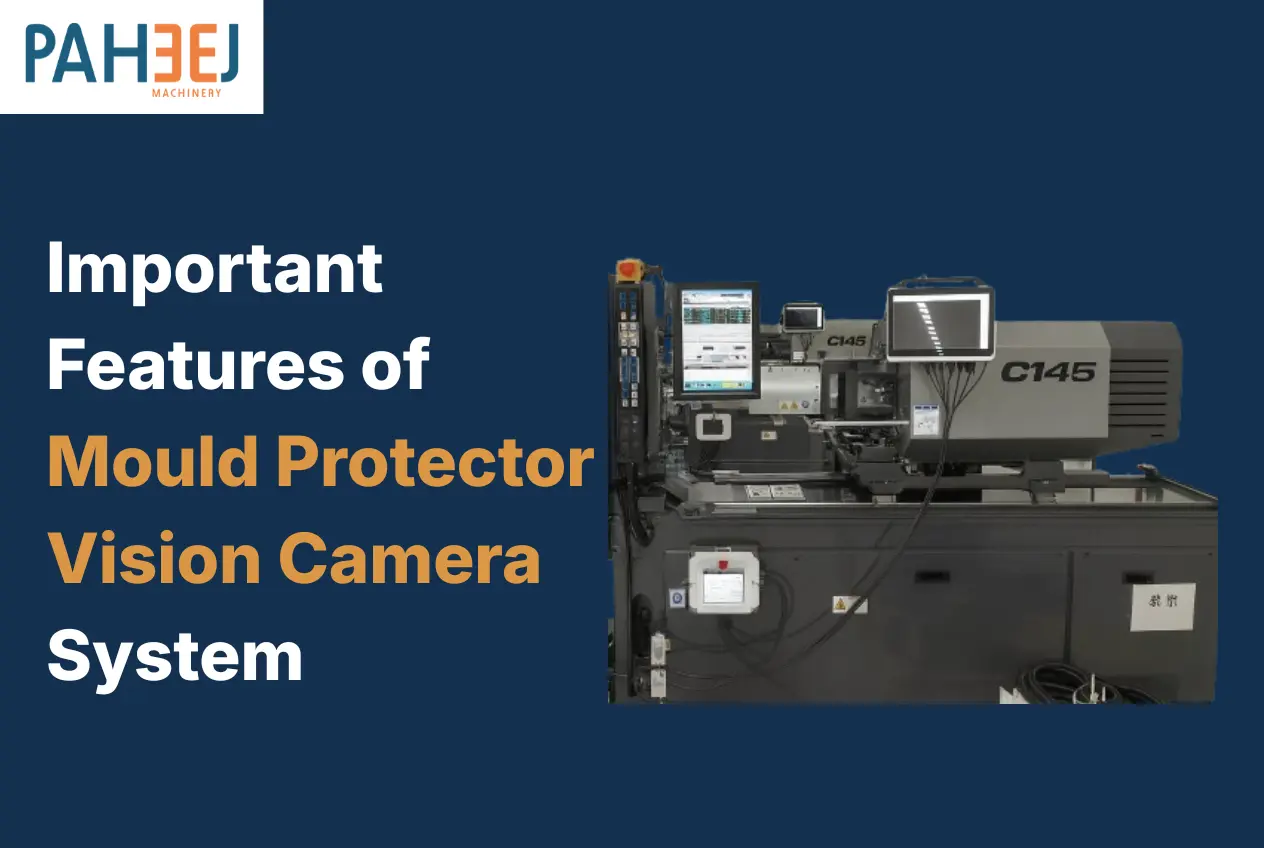
Important Features of Mould Protector Vision Camera Systems for Injection Moulding
Injection Moulding operations face constant risks from mould damage, misalignment issues, and unexpected production stoppages. A single mould crash can result in costly repairs, extended downtime, and significant scrap generation. Traditional protection methods relying on pressure sensors often react too late, allowing damage to occur before intervention.
Mould protector vision camera systems represent a proactive solution that safeguards moulds through real-time visual monitoring. These systems detect potential problems before they cause damage, protecting expensive tooling while ensuring consistent production quality.
Why Vision Camera Systems Are Essential in Modern Moulding
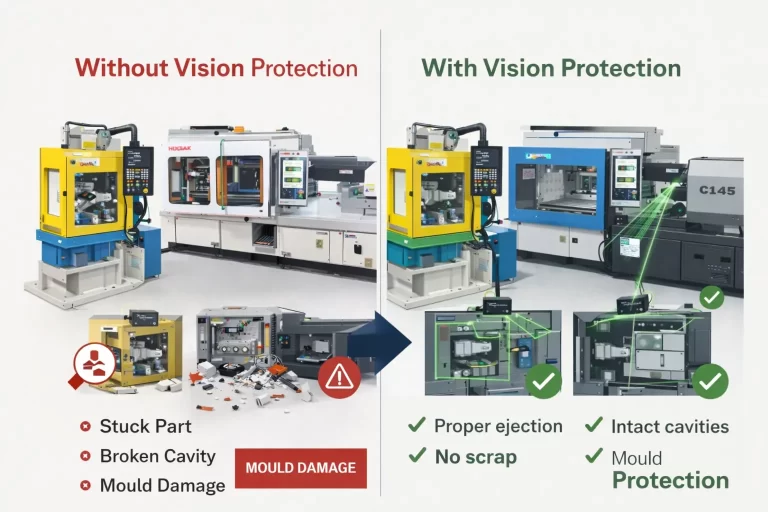
Manufacturing without vision-based mould protection faces critical challenges. Mould crashes damage cavities, cores, and sliding mechanisms, directly impacting tooling life and increasing downtime. Scrap generation multiplies when defects go undetected across multiple cycles.
Real-time vision camera mould protection enhances reliability across diverse applications:
- Insert Moulding operations verify proper insert positioning.
- Multi-component Injection Moulding ensures complete material removal between shots.
- High-volume production maintains consistent quality through continuous monitoring.
- Complex geometries are protected against ejection failures.
Core Features of Mould Protector Vision Camera System
1. High-Resolution Imaging and Precision Detection
High-resolution imaging captures detailed images that reveal incomplete ejection, part misplacement, slider interference, or foreign objects. Image quality directly determines detection accuracy and the system’s ability to identify subtle anomalies.
Precise detection prevents mould damage before clamp closure occurs. The system identifies issues during the brief window between mould opening and the next cycle start, triggering machine stoppage when problems are detected.
2. Real-Time Monitoring and Fast Response
Immediate feedback proves essential in fast-cycle environments where cycle times last only seconds. The vision system must capture, analyse, and respond quickly enough to prevent issues from recurring in the next cycle.
Rapid detection enables machine interlocks to halt production automatically when anomalies occur. This immediate response prevents damage rather than waiting to react after it occurs, ensuring the protection system keeps pace with production speeds.
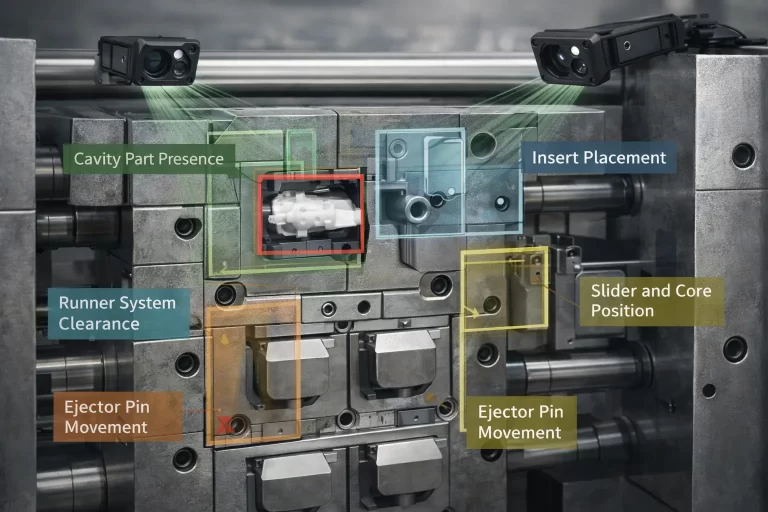
3. Multi-Angle and Multi-Zone Detection
Comprehensive monitoring requires visibility across multiple areas and angles. Multi-zone detection eliminates blind spots that compromise protection effectiveness.
Multi-zone capabilities monitor:
- Moulded parts in all cavity positions
- Insert placement and retention
- Runner system clearance
- Ejector pin operation and retraction
- Foreign objects or material residue
- Slider and core movement completion
4. Seamless Integration with Injection Moulding Machine Controls
An effective vision camera system integrates with injection moulding machine controls, including PLCs, servo systems, and safety logic. This enables an automated response without requiring operator intervention for each detection event.
The system communicates with machine controls to halt the next injection cycle when issues are detected, trigger alarms for specific problems, and log detection events for quality analysis. Automated integration reduces human error and maintains consistent cycle flow.
5. Software Intelligence and Pattern Recognition
Advanced algorithms distinguish between normal process variations and genuine quality issues. Pattern recognition identifies anomalies such as ejector failures, inconsistencies in part presence, or material buildup.
Intelligent detection provides:
- Reduced false alarms that disrupt production unnecessarily
- Stable protection that adapts to normal process variations
- Trending analysis identifying gradual changes requiring attention
- Configurable sensitivity balancing protection with production flow
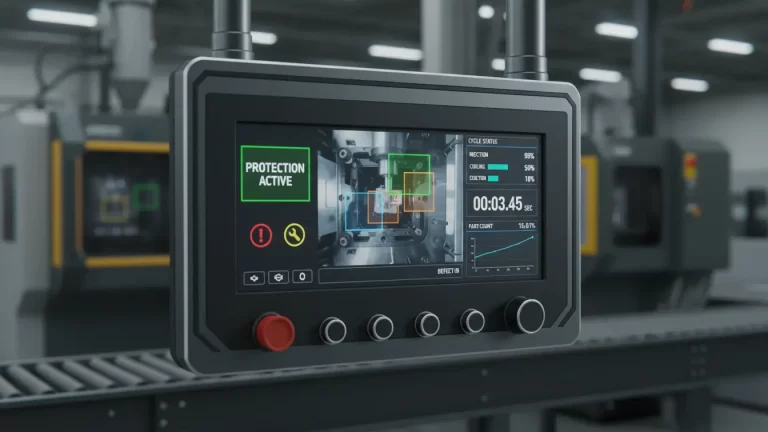
6. Intuitive User Interface for Operators
User-friendly displays enable operators to configure detection zones and monitor system performance without specialised training. Clear interfaces reduce setup time and ensure consistent operation across shifts.
Essential interface features include:
- Visual representation of detection zones for easy configuration
- Real-time display of captured images showing current conditions
- Clear alert messages identifying specific issues
- System status indicators confirming protection remains active
How These Features Improve Overall Production Performance
The features of mould protector vision camera systems deliver measurable benefits that directly impact manufacturing economics. Reduced mould repair costs result from preventing damage rather than reacting after incidents occur. Lower scrap generation follows from early detection before issues propagate across cycles.
Improved tooling safety extends mould life by preventing gradual wear and stress fractures. Stable, repeatable cycles maintain consistent quality standards while supporting predictable production planning. Vision camera mould protection ensures mould longevity and high-quality output throughout extended production runs.
Conclusion
Integrating a mould protector vision camera system addresses the challenge of balancing production speed with quality assurance and equipment protection. The combination of high-resolution imaging, intelligent detection logic, seamless machine integration, and real-time monitoring creates comprehensive protection.
These systems transform mould protection from reactive maintenance to proactive quality assurance. Manufacturers gain confidence to run production at optimal speeds while maintaining tooling integrity and part quality.
Paheej Machinery offers advanced mould protector vision camera systems designed to support safer, more reliable, and more efficient injection Moulding operations.