Top 8 Benefits of Vertical Injection Molding Machines for Precision & Efficiency
Manufacturing precision demands the right equipment choices, and vertical injection molding has emerged as a game-changing solution for modern plastic production. While traditional horizontal injection molding offers ways to manufacture certain plastic products, vertical injection molding machines provide many options that address space issues, precision issues, and production workflow issues.
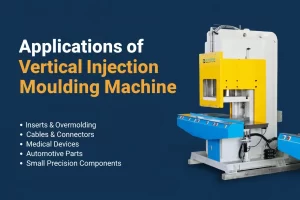
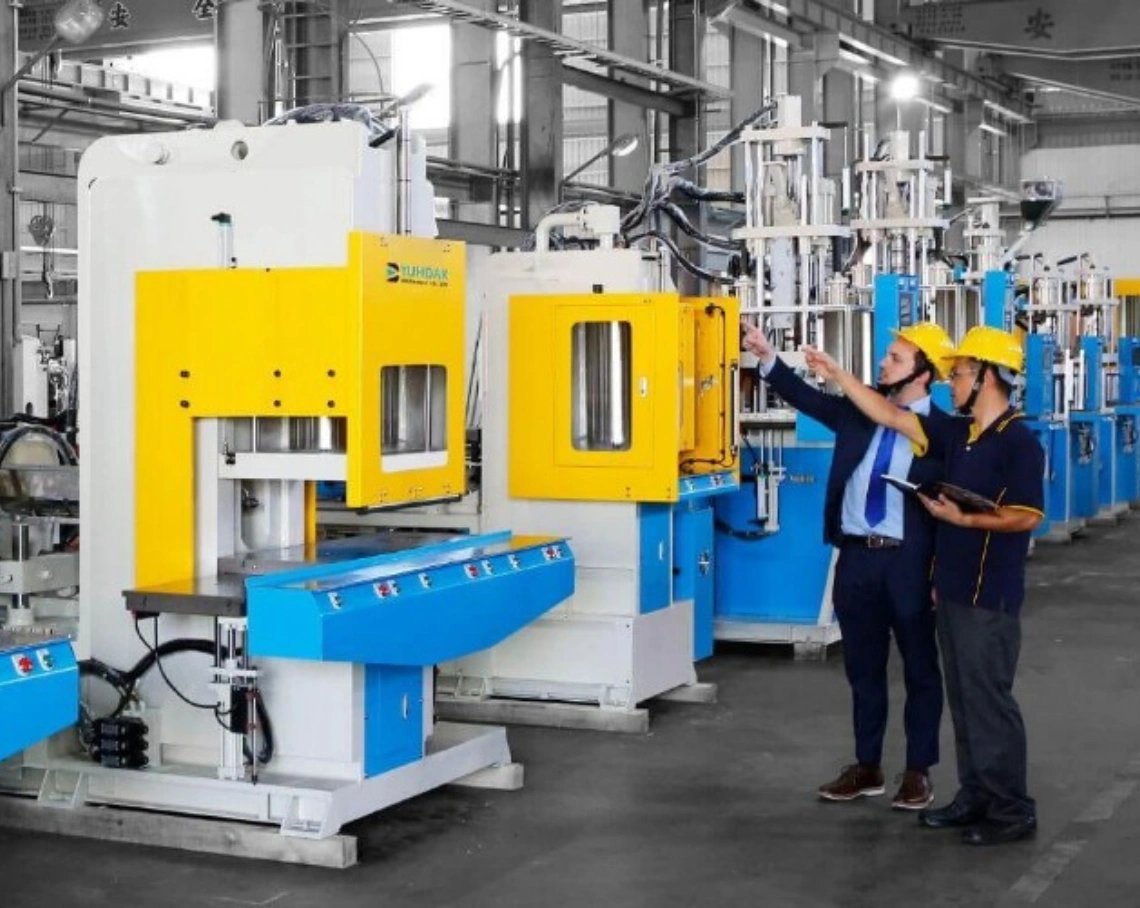
Vertical injection molding is a specialized manufacturing process where the injection unit operates vertically, with the mold opening and closing in an up-down motion rather than side-to-side. This configuration creates distinct operational benefits compared to horizontal injection molding, making it ideal for specific applications requiring enhanced precision and space optimization.
Key Benefits of Vertical Injection Molding Machines
1. Space Efficiency & Compact Design
One of the standout benefits of vertical injection molding is its minimal floor space requirements. These machines occupy a fraction of the space that horizontal units demand, making them perfect for facilities where every square foot counts.
The vertical mold movement allows manufacturers to fit more production capacity into smaller work areas. This space efficiency becomes particularly valuable for insert molding applications, where precise component positioning is essential. The vertical setup enables operators to easily access the mold area, allowing for quick insert placement, visual inspection, and cycle initiation with fewer steps.
2. Enhanced Precision & Consistency
Vertical injection molding machines deliver superior precision, largely thanks to gravity working in their favor. When mold halves move vertically, natural alignment occurs, ensuring the material flow follows the same path in every cycle. This consistent flow reduces variability, maintains mold-to-mold alignment, and keeps defect rates low.
The vertical platform provides balanced closing force distribution, which proves critical for detailed parts with tight dimensional tolerances. When gravity guidance combines with rigid platen design, issues like compression-induced shrinkage and tilting effects are minimized, producing parts that consistently stay within specifications. This results in reduced waste and establishes vertical systems as the preferred choice when exact measurements are essential.
3. Versatility & Customization
Vertical injection molding machines expand beyond standard molding capabilities. These systems seamlessly integrate insert molding, overmolding, and multi-component molding processes, enabling complex part production in a single cycle without requiring additional tooling.
The vertical geometry optimally supports various automation attachments. Rotary tables, linear systems, and robotic arms can be layered onto the same platform, combining insertion, sealing, and verification processes in coordinated sequences. This synchronized approach enhances production flexibility while maintaining consistent quality across different material types and part geometries.
4. Efficient Automation & Productivity
Vertical injection molding maximizes production efficiency through intelligent use of available space. Multiple mold configurations can operate simultaneously within the same footprint, utilizing parallel processing to optimize cycle times and increase overall throughput.
Setup times are significantly compressed due to shorter mold travel distances and streamlined automation that anticipates operator needs. Vertical handling systems position quickly and secure rapid mold changes, reducing manual effort and accelerating fixture swaps. Shorter cleaning, inspection, and material change cycles maintain continuous production flow, minimizing idle time and maximizing productivity.
5. Cost-Effectiveness & Energy Efficiency
Cost control and energy efficiency are major advantages of vertical injection molding. The compact design keeps facility costs low while modern electric systems draw only the necessary power for specific operations, reducing energy consumption significantly.
The vertical geometry naturally reduces material waste, cutting scrap rates and lowering overall material costs. Combined with reduced energy consumption, these factors create substantial cost savings throughout the machine’s operational life, delivering strong returns on investment and supporting sustainable manufacturing practices. When choosing vertical injection molding machines, these efficiency benefits are crucial to optimizing performance and reducing costs.
6. Ideal for Insert Molding
Vertical machine design dominates insert molding applications by delivering the most consistent production cycles. The gravitational advantage allows pre-formed components—whether metal inserts or polymer parts—to settle precisely into mold cavities without external positioning assistance.
The mold then closes under vertical pressure, securing the insert in place and optimizing cycle time through efficient heat distribution. This process creates reliable, multi-material assemblies with controlled dimensional tolerances and consistent surface quality across all features. The vertical structure eliminates positioning delays common with horizontal insert molding, making it the preferred choice for manufacturers producing complex assemblies.
7. Applications Across Industries
Vertical injection molding serves multiple industries requiring precision and tight process control. Automotive manufacturers use these systems for dashboard components, interior trim, and precision connectors where dimensional accuracy cannot vary.
The medical sector relies on vertical platforms for manufacturing syringes, instrument housings, and diagnostic device components, all produced to strict ISO standards. Electronics manufacturers depend on vertical systems for creating specialized housings, connector assemblies, and precision component packaging. Consumer appliance producers utilize this technology for protective housings, aesthetic components, and multi-material assemblies that meet demanding quality requirements.
8. Durability & Maintenance
High-quality vertical injection molding machines feature robust construction designed for long-lasting performance with manageable maintenance requirements. The vertical frame design naturally handles operational stresses and temperature variations, reducing wear on critical components like slide rails and drive systems.
Maintenance schedules are simplified because key systems, heating elements, drive components, and hydraulic valves are positioned for quick, unobstructed access during service. This accessibility eliminates unnecessary disassembly, minimizes downtime, reduces repair costs, and maintains more predictable production schedules.
Vertical vs Horizontal Injection Molding Machines
Understanding the key differences helps manufacturers make informed equipment decisions:
- Space Requirements: Vertical systems require less floor space but more vertical clearance, while horizontal machines need extensive floor area but standard ceiling heights.
- Automation Capabilities: Vertical machines excel with rotary tables and robotic integration, whereas horizontal systems typically use linear automation approaches.
- Energy Consumption: Vertical systems generally consume less energy due to compact design and gravity assistance, while horizontal machines may require more power for material handling.
- Precision Applications: Vertical orientation provides superior accuracy for insert molding and complex geometries, while horizontal systems excel in high-volume, simpler part production.
- Setup and Changeover: Vertical machines offer faster mold changes and easier access, whereas horizontal systems may require more complex changeover procedures.
Conclusion
The advantages of vertical injection molding extend beyond the basic means of producing plastic products and provide manufacturers with an all-in-one solution for higher levels of precision, efficiency, and improved flexibility of operations. From space optimization and energy efficiency to enhanced automation capabilities and superior insert molding performance, vertical systems deliver measurable advantages across multiple operational dimensions. These advanced molding solutions enable manufacturers to achieve higher precision, reduce operational costs, and implement sophisticated automation strategies.
Ready to optimize your production with cutting-edge vertical injection molding technology? Contact Paheej Machinery today for expert consultation on selecting the perfect vertical injection molding machine for your specific manufacturing requirements.